Adaptive Outdoor Adventure Plans: The Definitive Guide to Inclusive Exploration
The concept of “adventure” has long been synonymous with the conquest of rugged, unforgiving landscapes and environments that, by their very nature, were once seen as the exclusive domain of the able-bodied. However, a profound shift in the late 2020s has redefined the wilderness not as a barrier, but as a space for “kinetic equity.” This transition is fueled by a sophisticated intersection of modular equipment technology, universal design principles, and a nuanced understanding of risk management.
In the current landscape, the creation of adaptive outdoor adventure plans is no longer an exercise in “making do” with retrofitted gear. It is a specialized discipline that requires a rigorous assessment of the “Friction Points” between a participant’s unique physiological profile and the inherent unpredictability of the natural world. For editorial strategists and recreation planners, the goal is to design systems where the environment’s resistance is managed, but the essential spirit of the adventure, the uncertainty, the exertion, and the immersion remain intact.
This article serves as the definitive reference for the systemic planning of inclusive wilderness experiences. We will dissect the technical frameworks that underpin modern adaptive recreation, examine the economic and logistical drivers of the sector, and analyze the specific failure modes that occur when “accessibility” is confused with “simplification.” The objective is to provide a blueprint for adventures that are as resilient as they are inclusive.
Understanding “adaptive outdoor adventure plans.”
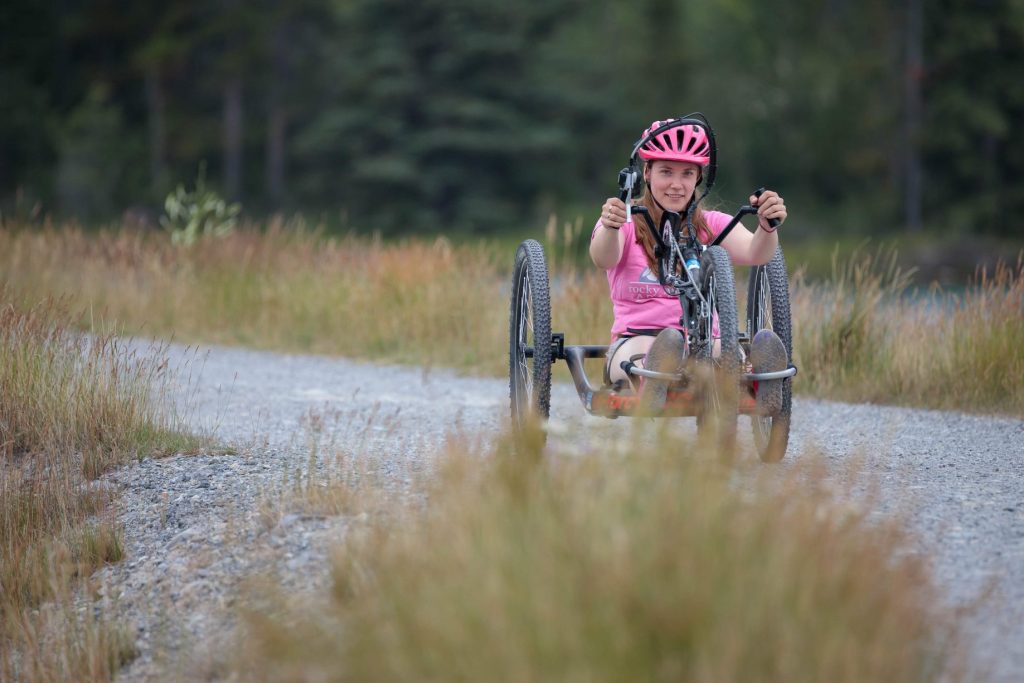
To effectively compare medical escort plans was a matter of clinical logistics; however, to adapt outdoor adventure plans is to balance human agency with environmental variables. At its core, an adaptive plan is a bespoke protocol that utilizes specialized equipment (such as off-road handcycles or sit-skis) and modified techniques to allow individuals with physical, sensory, or cognitive disabilities to engage in outdoor activities.
The primary misunderstanding in this domain is the “Leveling Down” myth, the belief that an adaptive adventure is somehow a “lesser” version of the standard experience. In reality, a high-fidelity adaptive plan often requires greater technical precision and more sophisticated logistical “Scaffolding” than a traditional trip. The “Oversimplification Risk” lies in viewing accessibility as a checklist of ramps and paved trails. True adaptive planning addresses “Topographical Literacy,” the ability to navigate uneven terrain using advanced mechanical leverage and team-based assistance.
A robust plan must also account for “Sensory Load Management.” For neurodivergent participants, the “adventure” isn’t just the physical hike; it is the management of the auditory and tactile input of the wilderness. Therefore, an adaptive plan is not just about the where, but the how, the specific cadence, the equipment redundancy, and the communication protocols that ensure the participant remains the primary actor in their own experience.
Deep Contextual Background: The Evolution of Kinetic Equity
The historical trajectory of adaptive outdoors can be divided into three distinct eras. The “Segregated Era” (pre-1990s) saw specialized, often clinical, programs where people with disabilities were “taken” into nature as passive observers. This was followed by the “Retrofitted Era” (1990s–2010s), where standard gear was often modified clumsily to meet the demands of a growing community of disabled athletes.
By 2026, we will have entered the “Native Design Era.” Major manufacturers like The North Face and specialized firms are now producing “Universal Collections” gear designed from the ground up to be zipperless, tactile, and compatible with mobility devices. Furthermore, the updated Title II of the ADA (Americans with Disabilities Act) in 2024 has pushed public agencies toward a “Digital and Physical Convergence,” where trail data must be as accessible as the trails themselves. This systemic evolution has transformed adaptive adventure from a niche service into a fundamental pillar of modern hospitality and land management.
Conceptual Frameworks and Mental Models
To design and evaluate adaptive outdoor adventure plans with editorial rigor, the following mental models are essential:
1. The “Mechanical Advantage” Framework
This model views adaptive equipment not as a “crutch,” but as a “Force Multiplier.” Just as a mountain bike allows a human to travel faster than on foot, a “GRIT Freedom Chair” or a carbon-fiber sit-ski utilizes mechanical leverage to bridge the gap between human capacity and terrain resistance. The plan’s success is measured by the efficiency of this leverage.
2. The “Cognitive Mapping” Model
For participants with visual or cognitive impairments, the wilderness is a series of “Data Points.” This framework assesses a plan based on its “Wayfinding Integrity,” how it uses haptic feedback, audio cues, and descriptive narration to create a mental map of the environment.
3. The “Team-As-System” Logic
In high-acuity adaptive adventures, the “unit” of movement is the team, not the individual. This model evaluates the “Redundancy” and “Synchronization” of the support staff or companions, ensuring that the participant’s agency is supported without being overshadowed.
Key Categories and Tactical Variations
Adaptive adventure plans are segmented by the “Environmental Interface” required.
| Category | Primary Equipment | Core Objective | Key Trade-off |
| Adaptive Alpine | Monoski / Bi-ski | High-speed gravity descent | Requires intensive instructor support |
| Off-Road Mobility | 4-Wheel Handcycles / e-Trackchairs | Backcountry trail access | High maintenance; battery life limits |
| Adaptive Aquatic | Modified Kayaks / Outriggers | Waterborne exploration | Risk of immersion; complex exit protocols |
| Neuro-Inclusive | Sensory Kits / Quiet Zones | Wilderness immersion for neurodiversity | Requires low-density site selection |
| Adaptive Climbing | Side-pull systems / Seated harnesses | Vertical ascent | Extremely high “Technical Setup” time |
Decision Logic: The “Terrain vs. Tech” Pivot
When selecting adaptive outdoor adventure plans, the decision point often hinges on “Active vs. Passive” participation. If a participant has the upper-body strength for a handcycle, the plan should prioritize “Self-Propelled Autonomy.” If the terrain exceeds the mechanical limits of the gear, the “Tactical Shift” must be toward “Assisted Power” or team-based hauling systems.
Detailed Real-World Scenarios
The “Backcountry Handcycle” Expedition
-
The Context: A paraplegic rider attempting a 3-day loop in the Moab desert.
-
The Failure Mode: “Track Width Conflict.” The plan fails to account for a narrow canyon section that is 2 inches narrower than the handcycle’s axle.
-
The Solution: High-fidelity plans utilize “LIDAR-based Trail Data” to ensure gear-to-terrain compatibility.
The “Visual-Guided” Summit
-
The Context: A blind hiker attempting a technical peak in the Cascades.
-
The System: Use of “Tethered Communication” where the lead guide provides “Micro-Topographical Descriptions” (e.g., “Step up 4 inches at 2 o’clock”).
-
The Nuance: The plan includes “Tactile Landmarks” to allow the hiker to verify their position independently.
Planning, Cost, and Resource Dynamics
The economic landscape of adaptive adventure is characterized by “High Capital Intensity” but “Lower Variable Costs” over time.
Estimated Resource Allocation (2026 Projections)
| Resource Element | Standard Adventure | Adaptive Equivalent | Cost Driver |
| Equipment Cost | $500 – $2,000 | $5,000 – $15,000 | Specialized materials/low volume |
| Staff Ratio | 1 Guide: 8 Clients | 2 Guides: 1 Client | Safety & mechanical assistance |
| Logistical Lead Time | 24 – 48 Hours | 2 – 4 Weeks | Permitting & custom gear setup |
| Insurance Premiums | Standard | +30% to +50% | Perceived risk of non-standard gear |
The “Opportunity Cost” of Poor Planning: In the adaptive sector, the cost of a “Plan B” is often 3x the cost of “Plan A.” If a trailhead is inaccessible upon arrival, the entire logistical chain, specialized transport, hired staff, and rented gear, is wasted. Robust adaptive outdoor adventure plans include “Pre-Trip Reconnaissance” as a non-negotiable line item.
Tools, Strategies, and Support Systems

-
Digital Elevation Modeling (DEM): Utilizing sub-meter resolution data to identify slopes that exceed the “Camber Limits” of a wheelchair.
-
Modular Power-Assist Units: Removable electric motors that can be added to manual gear for steep ascents, preserving the participant’s energy for “Technical Descents.”
-
Haptic Navigational Aids: Wearable devices that vibrate to indicate the edge of a trail or the direction of a waypoint.
-
Assistance Animal Logistics: Protocols for the safety and hydration of service animals in extreme heat or rough terrain.
-
Universal Design Trail Standards: Implementing “Lower Threshold” entries and “Oversized Loop” zipper pulls on all communal gear.
Risk Landscape: The Taxonomy of Compound Hazards
1. Thermal Regulation Failure
Participants with spinal cord injuries often have “Autonomic Dysreflexia” or impaired thermoregulation. A plan that fails to provide “Active Cooling” or “Rapid Re-warming” in fluctuating mountain weather is fundamentally flawed.
2. The “Equipment Tether” Risk
In adaptive climbing or kayaking, the participant is often mechanically tethered to the system. This creates a “Secondary Entrapment” risk during a fall or a capsize. Emergency protocols must include “Quick-Release” training for both the guide and the participant.
3. “Digital Exclusion.”
If a plan relies on an app that is not WCAG 2.1 compliant, a visually impaired participant loses their ability to monitor their own route or battery status, creating a “Dependency Crisis.”
Governance, Maintenance, and Long-Term Adaptation
Adaptive plans require a “Cyclical Review” to account for physiological changes and equipment wear.
The “Inclusion Audit” Checklist
-
Gear Recertification: Are the stress points on the sit-ski frame being X-rayed annually?
-
Staff Competency: Does the team have “Adaptive-Specific Wilderness First Aid” training?
-
Feedback Loops: Is there a formal process for participants to report “Micro-Barriers” (e.g., a heavy door at a lodge or a root-bound section of trail)?
Measurement, Tracking, and Evaluation
Success in adaptive adventure is measured by “Autonomy Recovery.”
-
Leading Indicator: “Pre-Adventure Self-Efficacy Score.” Does the participant feel they have the tools to navigate the challenges?
-
Lagging Indicator: “Mechanical Downtime.” The percentage of the trip lost to equipment failure or terrain incompatibility.
-
Documentation Example: A “Technical Route Profile” that maps every “Point of Assistance” required, allowing for year-over-year reduction in staff intervention.
Common Misconceptions and Oversimplifications
-
Myth: “Electric motors make it cheating.”
Correction: In adaptive contexts, e-assist is a “Physiological Bridge,” allowing for the same heart-rate effort as an able-bodied hiker. -
Myth: “Adaptive gear is indestructible.”
Correction: Lightweight composites used in handcycles are often more fragile than standard mountain bikes and require specialized field-repair kits. -
Myth: “Inclusion is only for physical disabilities.”
Correction: High-quality adaptive outdoor adventure plans address the “Invisible Spectrum,” including sensory processing and chronic fatigue.
Conclusion
The creation of adaptive outdoor adventure plans is a philosophical commitment to the idea that “Wilderness” is a universal human right. It is an acknowledgment that while nature is not “accessible” by default, our systems of engagement can be. By moving away from “Paternalistic Support” toward “Informed Autonomy,” we ensure that the outdoors remains a place of genuine challenge and profound growth for every traveler, regardless of their starting point. The future of adventure is not in the removal of the mountain, but in the perfection of the climb.