How to Plan Inclusive Trips on a Budget: A Master Guide for 2026
The travel industry, historically predicated on a “standardized body and mind” archetype, has long relegated inclusive design to the status of a premium service. This structural bias creates a paradox where individuals requiring the most logistical foresight, those with physical disabilities, neurodivergence, or sensory sensitivities, are often met with the highest financial barriers. In 2026, the challenge is no longer merely identifying accessible destinations but deconstructing the “inclusive premium” to make meaningful travel feasible for a broader socio-economic spectrum.
Achieving this requires a departure from traditional “off-the-shelf” travel planning. When accessibility is treated as a niche specialty, it attracts a significant markup from providers who bundle basic accommodations with high-cost coordination fees. To navigate this landscape efficiently, one must adopt the mindset of a logistical architect, identifying “Universal Design” assets that exist within standard infrastructure rather than relying solely on segregated, “specialized” tourism packages. It is an exercise in identifying where standard market efficiencies can be leveraged to support specific inclusion requirements.
The complexity of this task is magnified by the intersectionality of budget and access. A “budget” trip often implies the use of public transit, hostels, or remote locations that are traditionally less likely to be accessible than their high-cost counterparts. Therefore, the successful planner must engage in “Information Arbitrage,” using deep research and localized data to find the intersections where affordability and inclusion naturally coexist. This article serves as a definitive roadmap for mastering that intersection, focusing on systemic resilience and fiscal precision.
Understanding “how to plan inclusive trips on a budget.”

The primary hurdle in learning how to plan inclusive trips on a budget is the “Inclusion-Convenience Correlation.” In the commercial travel sector, convenience is often the primary driver of cost. For the inclusive traveler, “convenience” is frequently a synonym for “basic access.” A hotel with a roll-in shower or a quiet floor for neurodivergent guests is often positioned in a higher price tier, not because the modification itself is inherently expensive to maintain, but because it is categorized as a “specialty asset.”
Oversimplification in this domain often leads to a reliance on “inclusive” labels. A destination may market itself as accessible, but if that accessibility only applies to a single museum or a specific luxury resort, the traveler remains fiscally trapped within a narrow, high-cost ecosystem. True budget planning requires looking at the “Macro-Inclusivity” of a region, the reliability of its municipal elevators, the density of low-floor buses, and the presence of sensory-friendly public spaces. These systemic features are “free” to the traveler and significantly reduce the need for expensive private transport or specialized guides.
Furthermore, there is a misunderstanding regarding the “Cost of Spontaneity.” For a neurotypical, able-bodied traveler on a budget, spontaneity is a tool for saving money (e.g., catching a last-minute flight). For an inclusive trip, spontaneity is often a financial risk. An unplanned detour can lead to an inaccessible dead-end that requires a $100 emergency taxi ride to resolve. Therefore, budget integrity in this context is built on a foundation of “Granular Predictability.”
Deep Contextual Background: The Evolution of an Accessible Economy
The history of inclusive travel has transitioned from “Medicalized Segregation” to “Consumer Agency.” In the late 20th century, travel for those with additional needs was largely facilitated through charities or specialized medical transport. These options were either heavily subsidized or prohibitively expensive, with very little in between. There was no “middle market” for inclusive travel; you were either a patient or a high-net-worth individual.
The early 21st century brought the “Compliance Era,” where legislation like the Americans with Disabilities Act (ADA) and the European Access Act began to normalize modifications. However, the initial response from the hospitality industry was to treat these mandates as “add-on costs.” This led to the “Segregated Luxury” model, where the only truly accessible rooms in a hotel were the most expensive suites.
By 2026, the paradigm has shifted toward “Systemic Integration.” The rise of the “Silver Economy” (an aging global population) has forced municipal planners to treat accessibility as a baseline for economic viability. When a city like Barcelona or Tokyo invests in universal design for its residents, the “Budget Inclusive Traveler” becomes a secondary beneficiary of that local infrastructure. We are now in an era where data, real-time elevator status apps, and crowdsourced sensory maps act as a substitute for expensive, specialized intermediaries.
Conceptual Frameworks for Inclusive Planning
To maximize the efficiency of a limited budget, planners should apply these three core frameworks:
1. The “Infrastructure Leverage” Model
This framework prioritizes destinations where inclusion is “baked into” the public sector. Instead of searching for an accessible hotel first, one searches for cities with 100% low-floor bus fleets or level-entry rail systems. By choosing a city with high “Municipal IQ,” the traveler eliminates the $50–$100 daily cost of private accessible vans.
2. The “Buffer and Pivot” Framework
Budget travel is prone to failure (delays, cancellations, closures). For inclusive trips, these failures have higher stakes. This model requires a “Shadow Itinerary,” a pre-vetted, low-cost “Plan B” for every major segment. If a quiet park is closed, the traveler already knows of a nearby library with a sensory-friendly reading room, avoiding a high-stress, high-cost scramble.
3. The “Unbundling of Assistance.”
Traditional “inclusive packages” bundle accommodation, transport, and a “helper.” This framework deconstructs those needs. One might book a standard, well-vetted Airbnb with a ramp and use a localized gig-economy app to hire a trained support person for only the four hours of the day they are truly needed, rather than paying for a 24/7 travel companion.
Key Categories and Tactical Trade-offs
Planning requires a constant balancing act between specific inclusion needs and fiscal realities.
| Category | Primary Benefit | Fiscal Trade-off | Strategic Use Case |
| Municipal Hubs | Level-entry transit; high ADA-style density. | Higher daily “City Tax” and food costs. | High mobility or sensory needs. |
| Secondary Cities | Lower accommodation costs; less crowding. | Potentially fragmented public transit. | Neurodivergent/Sensory-seeking travelers. |
| P2P Housing | Personal kitchen (dietary control); home-like environment. | Requires heavy pre-trip vetting (video calls). | Families; long-term “Slow Travel.” |
| Repositioning Cruises | High ratio of inclusion per dollar; meals included. | Extremely rigid scheduling; remote ports. | Travelers requiring consistent medical/lift access. |
| Off-Season Nature | Low sensory load; zero “tourist markup.” | Poor weather; limited staffing for aid. | Budget neurodivergent planning. |
Decision Logic: The “Last-Mile” Calculation
When comparing a $100/night hotel in a city center vs. a $60/night hotel on the outskirts, the budget-inclusive planner must calculate the “Last-Mile Friction.” If the outskirts hotel requires a $30 round-trip private accessible van because the bus isn’t level-entry, the “cheaper” hotel is actually a $90/night risk with added fatigue.
Detailed Real-World Scenarios
The “Sensory-Safe” Solo Trip
-
The Context: A traveler with ADHD and sensory processing disorder seeking a 5-day urban break.
-
The Constraint: A total budget of $800.
-
The Failure Mode: Booking a “central” hostel that is above a nightclub, leading to sensory burnout and an emergency move to a $200/night hotel.
-
The Pivot: Selecting a “University District” in a secondary city during spring break. Universities are inherently designed for quiet study, have accessible transit, and offer low-cost student housing rentals that are significantly quieter than tourist centers.
The “Multi-Gen” Mobility Journey
-
The Context: A family including one wheelchair user and two children visiting a coastal region.
-
The Nuance: Standard “Accessible Shore Excursions” are priced at $150 per person.
-
The Management: The family utilizes “Localized Peer-to-Peer” van rentals and visits public, “Blue Flag” accessible beaches (which are free and have ramps into the water). By bypassing the “Excursion” markup, the family saves $400 in a single day.
Planning, Cost, and Resource Dynamics
The “Economics of Accessibility” is often a “Front-Loaded” model. You spend more time planning to spend less money on execution.
Range-Based Resource Comparison (Daily Averages)
| Expense Tier | “Standard” Budget | Inclusive Budget (Reactive) | Inclusive Budget (Strategic) |
| Transit | $15 (Bus/Walk) | $80 (Private WAV Taxis) | $20 (Vetted Public Rail) |
| Lodging | $70 (Hostel/Basic) | $180 (Premium Accessible Room) | $110 (Vetted P2P Apartment) |
| Food | $30 (Street/Market) | $50 (Room Service/Sit-down) | $35 (Self-catering/Verified) |
| Activities | $20 (Generic) | $100 (Assisted Tours) | $15 (Free Public Access) |
The “Time-Value” of Accessibility: In inclusive planning, “Time” is a currency that can be traded for “Access.” A direct, 1-hour flight is expensive. A 6-hour train journey might be 70% cheaper and offer a much more spacious, accessible bathroom and the ability to remain in a wheelchair, which a flight does not. For the budget planner, the “Slow Travel” movement is not just a lifestyle choice; it is a fiscal necessity.
Tools, Strategies, and Support Systems
-
Open-Source Accessibility Heatmaps: Platforms like Wheelmap allow for real-time verification of “step-free” status for low-cost cafes and parks.
-
Sensory Room Databases: Identifying “Hidden Quiet Zones” in airports and major transit hubs (often in chapels or multi-faith rooms) to avoid the $50 “Lounge” fee.
-
Digital “Access Passports”: Standardized PDFs in the local language explaining needs (e.g., “I need a chair in the shower”) to avoid “Miscommunication Surcharges.”
-
Virtual Site Audits: Using 360-degree street view and “user-uploaded” photos on travel forums rather than trusting the polished “marketing” photos on hotel websites.
-
Community-Based Equipment Exchanges: Renting specialized beach wheelchairs or lifts from local disability organizations rather than international medical supply companies.
-
“Hidden Disability” Lanyards: Programs like the Sunflower Lanyard allow for free, subtle assistance in many global transit hubs, reducing the need for paid “VIP” assistance.
Risk Landscape: The Taxonomy of Inclusive Failure
1. The “Compliance Mirage.”
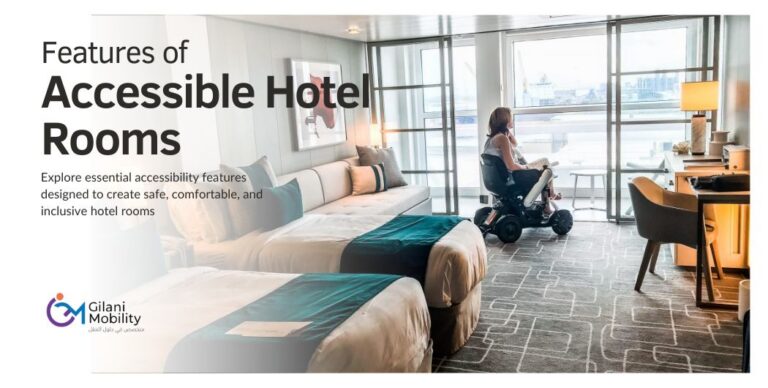
The risk of a hotel being “ADA Compliant” but functionally unusable (e.g., the bed is too high for a transfer). On a budget trip, this is a “Bankruptcy Event” if the hotel is non-refundable. Mitigation: Always request a timestamped photo of the specific bathroom before booking.
2. The “Elevator Cascade.”
In many older cities, the “Accessible Route” relies on a single elevator. If that elevator is broken, the next accessible station may be 2 miles away. Mitigation: Use apps that pull real-time municipal maintenance data.
3. The “Sensory Drift.”
A quiet neighborhood during the day that becomes a loud festival site at night. For neurodivergent travelers, this can lead to an expensive “Flight Response.” Mitigation: Check local “Noise Ordinances” and event calendars for a 5-mile radius.
Governance, Maintenance, and Long-Term Adaptation
A successful inclusive travel strategy requires a “Post-Trip Audit” to refine future budgets.
The “Inclusive Budget” Governance Checklist
-
Documentation: Did the “Accessible” transit actually work? If not, document the cost of the workaround for next year’s “Contingency Fund.”
-
Review Cycle: Every six months, update the “Gear List.” Could a $50 portable door-lock or a $20 foldable ramp have saved a $200 hotel upgrade?
-
Adjustment Triggers: If a destination’s public transit reliability drops below 80% (based on recent forums), it should be removed from the “Budget Inclusive” list and moved to the “Premium/Assisted” list.
Measurement and Evaluation: Indicators of Financial Health
-
Leading Indicator: “Pre-Verified Ratio.” The percentage of the itinerary that was verified via “User-Generated Data” rather than “Marketing Data.” High verification leads to low emergency spend.
-
Lagging Indicator: “The Stress Premium.” The amount of money spent on “unplanned” upgrades or meals due to exhaustion or sensory overload. A successful trip has a low stress premium.
-
Documentation Example: A “Friction Log” that tracks every time a budget barrier (e.g., no elevator) resulted in a financial cost.
Common Misconceptions and Ethical Paradoxes
-
Myth: “Europe is too old to be accessible on a budget.”
Correction: While the buildings are old, European public transit in many cities (Berlin, Vienna, Madrid) is often more reliable and “step-free” than newer North American cities. -
Myth: “You have to tell the airline everything.”
Correction: While you must declare medical equipment, over-sharing can sometimes lead to unnecessary (and sometimes paid) “required” assistance. Know your legal rights (Air Carrier Access Act) to avoid being “upsold” on safety. -
Myth: “Accessibility Gentrification.”
Correction: Often, the most accessible neighborhoods are the ones being gentrified, which can drive up costs for local disabled residents. Budget-inclusive travelers must be mindful of supporting local, disability-owned businesses to ensure the economic benefit stays within the community.
Conclusion:
The ability to plan inclusive trips on a budget is more than a financial skill; it is an act of “Logistical Sovereignty.” It requires moving away from the “Medical Model” of travel, where the traveler is a passive recipient of care, toward a “Social Model,” where the environment is the variable that must be mastered. In 2026, the digital tools available have democratized the “Information Layer” of travel, allowing budget-conscious individuals to bypass the gatekeepers of expensive, specialized tourism. The most successful inclusive trips are those where the budget is not a limitation, but a catalyst for deeper, more authentic engagement with the world’s growing infrastructure of universal design.