How to Avoid Hotel Accessibility Risks: A Master Guide for 2026
The global hospitality sector operates on a premise of “Standardized Comfort,” a design philosophy that optimizes for the median traveler. For those requiring specific environmental modifications ranging from mobility aid clearances to sensory regulation, this standardization becomes a landscape of logistical friction. The hotel room is not merely a place of rest; it is a critical interface between a guest’s biological or mechanical needs and a rigid built environment. When this interface fails, the consequences move rapidly from inconvenience to acute safety hazards, including the risk of falls, equipment damage, or the total loss of autonomy.
Navigating the hospitality market requires a transition from the role of a “Guest” to that of a “Site Auditor.” The industry’s reliance on third-party booking platforms and generalized compliance labels has created a significant “Information Gap.” A hotel may be legally classified as accessible, yet contain “Silent Barriers” such as thick pile carpeting that prevents wheelchair movement or high-gloss surfaces that trigger sensory overload that a standard compliance check would never flag. As we move through 2026, the complexity of these environments is increasing with the integration of “Smart Room” technologies, which often introduce new digital barriers for those with cognitive or motor dexterity challenges.
Reducing exposure to these failures requires a disciplined, editorial approach to vetting. It is an exercise in “Environmental Intelligence,” involving the deconstruction of marketing imagery, the verification of physical dimensions, and the interrogation of staff competency. This article provides a definitive framework for managing these variables, moving beyond basic checklists to examine the structural and systemic reasons why hotels fail their most vulnerable guests. By understanding the mechanics of these failures, travelers can construct a “Buffer of Resilience” that preserves both their safety and their dignity in unfamiliar spaces.
Understanding “how to avoid hotel accessibility risks.”
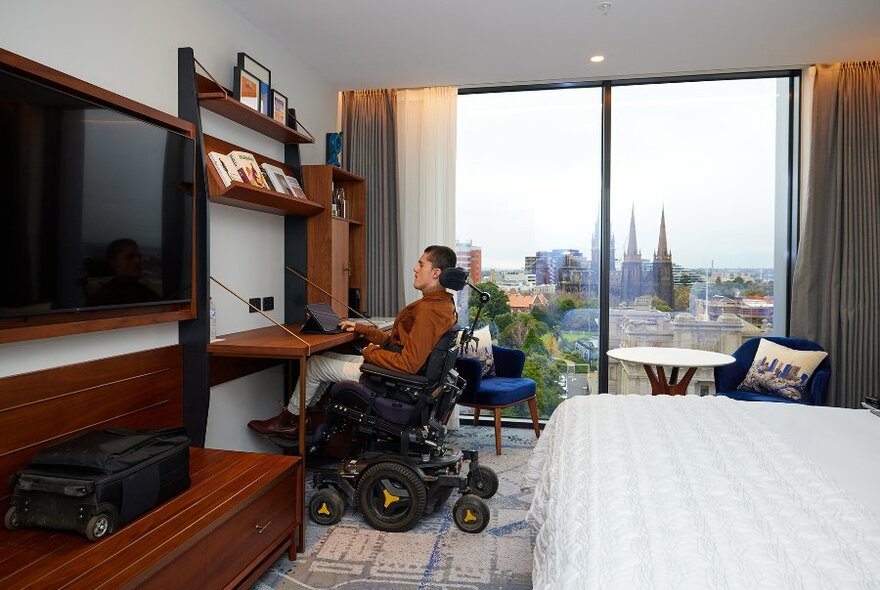
To effectively master how to avoid hotel accessibility risks, one must first dismantle the “Compliance Illusion.” This is the mistaken belief that because a hotel carries a specific certification, such as ADA in the United States or equivalent international standards, it is functionally optimized for all disabilities. Compliance is a legal baseline designed to avoid litigation, not a clinical standard for individual utility. A room may have the correct number of grab bars, but if they are positioned in a way that prevents a specific wheelchair transfer, the compliance is functionally irrelevant.
Oversimplification in this domain often stems from the “Binary Labeling” of rooms. Most booking systems treat accessibility as a toggle switch: a room is either accessible or it is not. This ignores the “Spectrum of Need.” A traveler with low vision requires high-contrast environments and clear tactile markers, which are often the exact opposite of the “muted, minimalist” aesthetic found in modern accessible suites. Managing risk requires “Multimodal Auditing,” evaluating a space through the lenses of physical clearance, sensory load, and cognitive navigability simultaneously.
Furthermore, there is a “Communication Gap” between corporate policy and ground-level execution. A hotel’s headquarters may mandate inclusive training, but the night-shift clerk may not know how to operate the pool lift or where the vibration-based smoke alarms are stored. True risk mitigation involves “Verification at the Edge,” engaging directly with the individuals who maintain the physical space to confirm that “Paper Accessibility” translates into “Operational Reality.”
Deep Contextual Background: The Evolution of Inclusion
The history of hotel accessibility has moved from “Medicalized Segregation” to “Integrated Universal Design.” In the mid-twentieth century, if a hotel offered any accommodation at all, it was often an ad-hoc modification, a temporary ramp, or a portable chair in a standard tub. These solutions were inherently unstable and carried high “Mechanical Risk.”
The 1990s and early 2000s were defined by the “Retrofit Era.” Legislation forced existing structures to adapt. The result was often “Awkward Integration,” where accessible rooms were located at the furthest possible point from the lobby or had bathrooms that felt clinical rather than hospitable. This era was characterized by “Physical Compliance” but lacked “Aesthetic Equity.”
In 2026, we are entering the era of “Volumetric Intelligence.” Modern architecture is beginning to use universal design principles from the foundation up, curb-less showers, wider hallways, and intuitive lighting as standard features for all guests. However, the legacy of older buildings remains a primary source of risk. The “Accessibility Heritage Gap” means that a traveler must manage two entirely different risk profiles: the “Digital/Technical Risks” of new smart hotels and the “Structural/Mechanical Risks” of historic properties.
Conceptual Frameworks for Environmental Vetting
To analyze a potential stay with editorial rigor, consider these frameworks:
1. The “Path of Travel” Continuity
This model posits that accessibility is a chain. If the hotel room is perfect but the path to the breakfast area involves a three-inch step or a heavy manual door, the “Inclusion Chain” is broken. Risk management requires an audit of every transition point from the parking lot to the bedside.
2. The “Transfer-Point” Physics
For mobility aid users, risk is highest during “Transfers,” moving from a wheelchair to a bed, toilet, or shower seat. This framework analyzes the “Stability and Clearance” of these points. It identifies “Dead Zones” where a lack of floor space prevents a safe approach or where a soft mattress makes a stable transfer impossible.
3. The “Sensory Budget” Model
Travelers with neurodivergence or sensory processing sensitivities operate on a “Sensory Budget.” Every loud hallway, flickering LED, or strong cleaning chemical “spends” that budget. Managing risk involves identifying “Sensory Leaks” and finding hotels that offer “Regulatory Assets,” such as sound-dampening curtains or scent-free floors.
Key Categories of Risk and Strategic Trade-offs
Hospitality risks are generally segmented by the “Environmental Domain” they occupy.
| Category | Primary Risk Factor | Strategic Trade-off | Prevention Metric |
| Mobility/Clearance | Thresholds/Narrow Apertures | Luxury Finishes vs. Maneuverability | 32-inch Clear Width |
| Wet-Area Safety | Slip Hazards/Seat Stability | Aesthetics vs. Traction | Weighted Grab-bar Rating |
| Bed/Furniture | Transfer Height/Softness | Comfort vs. Mechanical Leverage | 20-23 inch Bed Height |
| Sensory Load | Acoustic/Olfactory triggers | Central Location vs. Quietude | STC (Sound Class) Rating |
| Digital Access | Non-tactile smart controls | Tech Innovation vs. Reliability | Manual Override Availability |
| Emergency | Inaccessible evacuation routes | Floor Level vs. View/Price | Ground-floor Proximity |
Decision Logic: The “Brand Standard” vs. “Boutique” Dilemma
When seeking to minimize risk, the traveler faces a choice: the “Predictable Compliance” of a global chain or the “Individualized Care” of a boutique hotel. Chains offer standardized room layouts that are easier to audit remotely, but boutique staff are often more empowered to make physical room modifications on the fly. The decision logic should favor “Chairs” for short, high-stakes business travel and “Boutiques” for longer, more adaptable leisure stays.
Detailed Real-World Scenarios
The “High-Base” Bed Crisis
-
The Context: A traveler with limited upper-body strength arrives at a luxury hotel to find the “Accessible Room” has a decorative 30-inch high bed on a platform.
-
The Risk: A failed transfer resulting in a fall and a potential hospital visit.
-
The Mitigation: Before booking, the traveler requires a photo of a yardstick against the bed. If the bed is too high, they request the removal of the mattress “box spring” or the bed frame itself before arrival.
The “Digital Gatekeeping” Fail
-
The Context: A modern “Smart Hotel” where lights and curtains are controlled via a wall-mounted tablet with no tactile buttons.
-
The Risk: A guest with low vision or motor tremors is unable to control their environment, leading to a “Sensory Lockdown” or inability to use the room at night.
-
The Resolution: Utilizing a “Compatibility Audit” during check-in to ensure the hotel provides a physical remote or that the guest’s own voice-assistant can bridge to the hotel’s API.
Planning, Cost, and Resource Dynamics
The “Economics of Hotel Risk” is defined by the “Vetting-to-Failure” ratio. Investing time in pre-trip auditing is a direct substitute for the high cost of emergency re-booking.
Range-Based Resource Comparison
| Expense Type | Reactive (High Risk) | Proactive (Managed) | Impact on Safety |
| Research Labor | 15 mins (Filter search) | 4 hours (Direct Audits) | -75% Arrival Failure |
| Direct Costs | Standard Rate | “Guaranteed” Room Surcharge | High |
| Equip. Rental | $0 (Assume hotel has it) | $150 (Private hoist rental) | Essential for safety |
| Recovery Fund | $0 | $500 (One-night backup) | Tactical Resilience |
The “Opportunity Cost” of Heritage: Choosing an older, “charming” hotel in a historic district often carries a 30% higher risk of “Structural Failure” (e.g., elevators too small for power chairs). For the risk-averse traveler, the “New-Build Premium,” the extra cost of staying in a modern business hotel, is a justifiable insurance expense.
Tools, Strategies, and Support Systems
-
The “Measurement Script”: A pre-written list of questions for hotel front desks: “What is the exact height from the floor to the top of the mattress?” and “Is there clear space under the bed for a lift?”
-
Remote Video Audits: Using video calls with a staff member to “walk” from the elevator to the bathroom in real-time.
-
Portable “Hardening” Kits: Carrying a set of strong suction-cup grab bars (as a backup only), door-widening hinges, or portable ramps to fix minor “Arrival Failures.”
-
Tactile Overlay Kits: Small, clear adhesive bumps to place on “Smart” flat-panel controls to make them usable for those with visual or motor impairments.
-
Direct-to-Maintenance Rapport: Establishing a relationship with the hotel’s head of maintenance rather than the sales team; maintenance knows the “Actual” state of the rooms.
-
Ambient Noise Apps: Using high-fidelity white noise generators to mask the “Acoustic Leaks” often found in accessible rooms located near elevators or service doors.
Risk Landscape: A Taxonomy of Hospitality Failure
1. The “Compliance Ghetto” Risk
Accessible rooms are often grouped near the “Loudest” parts of the hotel, such as elevators, ice machines, or laundry chutes. This creates a “Compounding Risk” where physical access is provided at the expense of sensory regulation.
2. The “Maintenance Drift.”
A room is built correctly, but over time, the “Clearance” is lost as staff adds decorative furniture, thick rugs, or plants that block the turning radius. This is a failure of “Operational Governance.”
3. The “Emergency Egress” Trap
Most hotels use elevators as the primary path for accessible rooms on high floors. In a fire, elevators are disabled. A “Critical Risk” occurs when the hotel has no “Evacuation Chair” or trained staff to assist those on higher floors, making the ground-floor room a “Safety Imperative.”
Governance, Maintenance, and Long-Term Adaptation
For the frequent traveler, managing hotel risk is an ongoing “Systemic Review.”
The “Hospitality Integrity” Checklist
-
Quarterly: Review personal “Access Passport” dimensions of current equipment and specific bedside requirements.
-
Arrival (The 5-Minute Audit): Test the stability of the shower seat and the temperature of the water (burn risks are higher for those with neuropathy) before unpacking.
-
Post-Stay: File a “Friction Report” with the hotel general manager. If a grab bar was loose or a threshold was too high, documenting it ensures “Long-Term Systemic Repair.”
-
Documentation: Maintain a “Reliable Room” database, specific room numbers in specific cities that have been personally verified.
Measurement and Evaluation: Indicators of Success
-
Leading Indicator: “Verification Accuracy.” The percentage of times the hotel’s verbal description matched the physical reality upon arrival.
-
Lagging Indicator: “Recovery Time.” The number of hours spent fixing “Arrival Failures” (moving furniture, switching rooms). A successful strategy keeps this below 30 minutes.
-
Qualitative Signal: “Energy Reserves.” Assessing if the environment supported “Rest” or if the traveler felt they were “Fighting the Room” for basic needs.
Common Misconceptions and Oversimplifications
-
Myth: “The ADA ensures my room will be held.”
Correction: Overbooking happens. A “Guaranteed Accessible Room” is a contractual promise, but physical reality (a pipe bursting in that specific room) can still lead to a “Displacement Risk.” -
Myth: “Service animals are always welcome.”
Correction: While legally required, the “Staff Friction Risk” remains high. Carrying a “Rights Card” in the local language is a necessary defensive tool. -
Myth: “Handheld showers are standard in accessible rooms.”
Correction: Many hotels still have “Fixed-Head” showers that are unusable for those who must remain seated. Always verify the “Handheld” status. -
Myth: “Modern hotels are always better.”
Correction: Modern “Industrial” aesthetics often use polished concrete or tile that is dangerously slippery when wet, unlike the older, “less cool” vinyl or textured flooring.
Conclusion:
The process of how to avoid hotel accessibility risks is a transition from being a passive consumer to an active “Architect of One’s Environment.” In 2026, the burden of accessibility remains unfairly distributed, requiring the disabled traveler to possess a higher degree of logistical and technical knowledge than their peers. However, by adopting a systemic approach to vetting, treating every hotel stay as a series of measurable “Environmental Transfers,” travelers can reclaim their agency. The goal is a world where “Universal Design” makes this labor unnecessary, but until that architecture is realized, the informed, vigilant traveler remains the most effective safeguard of their own safety and mobility.