Top Inclusive Parks in America: A Definitive Guide to Universal Design
The conceptualization of public space in the United States is currently undergoing a radical structural shift. For much of the twentieth century, municipal and federal parks were designed around an idealized, “abled” body, a demographic assumption that inadvertently categorized millions of citizens as peripheral users. While the Americans with Disabilities Act (ADA) of 1990 established a legal floor for physical access, the contemporary movement toward “Inclusive Design” seeks a much higher ceiling. It is no longer sufficient to simply provide a ramp; the goal is to create environments where people of all physical, sensory, and cognitive abilities can engage with the landscape simultaneously and with equal dignity.
This transition from “accessible” to “inclusive” is particularly evident in the American park system, where the sheer geographic and ecological diversity of the country presents unique architectural challenges. In a dense urban center, inclusivity might mean a playground where a wheelchair-using parent can play alongside their child. In a vast national park, it might mean a boardwalk system that provides a tactile and auditory experience of a geothermal basin. These spaces are becoming “social infrastructure,” designed to mitigate the isolation that often accompanies physical or neurological differences.
Understanding “top inclusive parks in America.”
To define the top inclusive parks in America, we must first deconstruct the pervasive misunderstanding that inclusion is synonymous with disability-only design. A common error in municipal planning is the creation of “special” zones,s segregated areas of a park designed for specific needs. However, the most successful inclusive parks are those that achieve “Experience Parity.” This means the design is so well-integrated that a child with a mobility aid, a senior with low vision, and a neurotypical adult can all utilize the same primary features without feeling categorized or separated.
The Multi-Perspective Definition
From the perspective of a landscape architect, an inclusive park is one that masters “Functional Flow,” the ability to move from a parking area to a primary attraction without encountering a “hidden” barrier like a thick patch of mulch or a steep, unassisted grade. From a social perspective, inclusivity is about “Social Proximity,” ensuring that adaptive equipment is placed in the center of the action, not relegated to the quietest corner of the property. The risk of oversimplification is high; a park might have a million-dollar inclusive playground but lack an accessible bathroom, creating a “dead-end” utility that prevents long-term use.
The Nuance of Sensory and Cognitive Inclusion
In recent years, the definition has expanded beyond physical mobility to include sensory and cognitive considerations. Top-tier parks now account for “Sensory Regulation,” providing quiet zones for individuals with autism to decompress, as well as high-contrast visual cues for those with cognitive impairments. The challenge for these spaces is balancing the “high-energy” requirements of a traditional park (movement, noise, social interaction) with the “low-energy” needs of sensory-sensitive visitors.
Systemic Evolution: From Compliance to Inclusion
The history of American parks mirrors the nation’s broader civil rights journey. In the pre-ADA era, parks were often rugged, naturalistic, and fundamentally exclusionary for those who could not navigate uneven terrain. The post-1990 era saw a “Retrofit Wave,” where ramps and lifts were added as visible afterthoughts. While functional, these additions often lacked aesthetic parity and emphasized the difference between users.
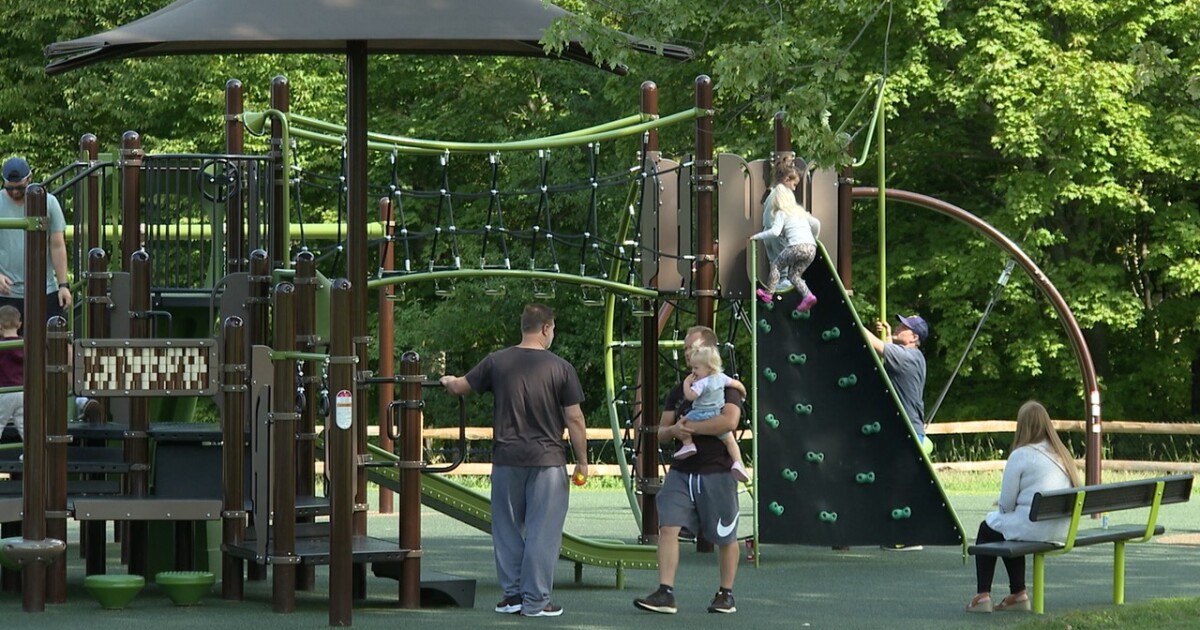
The current “Universal Integration” era, beginning around 2015, represents a shift toward designing parks where the inclusive features are “baked in.” We see this in the rise of “Miracle Leagues” and “all-abilities” playgrounds where the surface material is poured-in-place rubber rather than wood chips, benefiting everyone from wheelchair users to toddlers learning to walk. This evolution is driven by a mix of grassroots advocacy from families and a growing body of data showing that inclusive parks increase overall municipal engagement and property values, proving that inclusive design is a “universal benefit” rather than a “special interest” cost.
Conceptual Frameworks for Evaluating Inclusive Utility
When assessing a park’s inclusion credentials, editorial judgment relies on several rigorous mental models.
1. The “Continuous Path of Travel” Model
This framework views the park not as a collection of features, but as a single, unbroken journey.
-
The Logic: Inclusivity is measured by the weakest link in the path. If a park has an accessible fishing pier but the path to get there is gravel, the pier is effectively non-existent for many users.
-
The Limit: This model is difficult to apply in “Wilderness” or “Backcountry” settings where the terrain itself is the attraction.
2. The “8-to-80” Rule
Developed by urbanist Gil Penalosa, this model suggests that if a feature is safe and enjoyable for an 8-year-old and an 80-year-old, it is likely inclusive for the entire population.
-
The Logic: Designing for the “extremes” of the age spectrum naturally captures the needs of people with diverse physical abilities.
-
The Limit: This rule can sometimes overlook the specific, high-intensity needs of power-chair users or individuals with profound sensory sensitivities.
3. The “Social Integration” Framework
This model evaluates whether the park facilitates interaction between abled and disabled users.
-
The Logic: Does the “inclusive swing” allow two people to sit face-to-face? Are the picnic tables designed so a wheelchair user can sit in the middle of the group rather than at the end?
-
The Limit: Promoting social proximity must be balanced with the need for “Refuge Zones” where overstimulated users can withdraw without leaving the park entirely.
Key Categories and Typologies of Inclusive Public Spaces
The top inclusive parks in America generally fall into several distinct categories, each with specific trade-offs and operational goals.
| Category | Primary Focus | Best Practice Example | Trade-off |
| Signature All-Abilities Playgrounds | High-density social play; specialized equipment. | Morgan’s Wonderland (TX); Magical Bridge (CA) | High capital cost; requires constant maintenance of moving parts. |
| Accessible Wilderness/Nature Trails | Low-impact boardwalks; tactile nature experiences. | Acadia NP (Jesup Path); Yellowstone (Old Faithful) | Restricted “off-path” exploration to protect fragile ecosystems. |
| Inclusive Urban Waterfronts | Flat, paved connectivity; integrated lifts for water access. | Chicago Riverwalk; San Antonio River Walk | High sensory load (noise/crowds) can be a barrier for some. |
| Sensory-Centric Gardens | Olfactory and tactile focus; auditory landmarks. | Elizabeth & Nona Evans Restorative Garden (OH) | Seasonality: high maintenance of plant life for scent/texture consistency. |
| Adaptive Sports Complexes | Specialized fields (Miracle League); accessible dugouts. | Liberty Swing parks; various regional sports hubs. | Often “reservation-only,” limiting spontaneous public use. |
Decision Logic for Park Selection
For a traveler or a resident, the choice of an inclusive park often hinges on the “Independence-to-Support” ratio. A signature playground provides a high degree of support through specialized equipment, but may feel “prescriptive.” In contrast, an inclusive urban waterfront offers high independence through wide, flat paths but may require the user to provide their own “last-mile” support for specific activities like boarding a boat.
Detailed Real-World Scenarios and Operational Decision Points
The “Mulch vs. Rubber” Conflict
A municipal park board is redesigning a neighborhood playground. Mulch is 80% cheaper but creates a significant barrier for wheelchair self-propulsion and can be a sensory irritant for children with pica or tactile sensitivities.
-
The Decision: The board opts for Poured-in-Place (PIP) rubber.
-
Second-Order Effect: The PIP surface allows the park to stay open immediately after rain, as it doesn’t turn into mud, increasing the “utility hours” for the entire community.
-
Failure Mode: Without UV-protection maintenance, PIP rubber can become dangerously hot in direct sunlight, requiring the addition of expensive shade structures.
The “Tactile Wayfinding” in a Botanical Garden
A historical botanical garden wants to become inclusive for low-vision visitors without installing conspicuous, modern signage that “breaks” the aesthetic.
-
The Strategy: Using “Ground-Plane Logic,” changing the texture of the path (from smooth stone to rough brick) to signal an upcoming intersection or a change in plant zone.
-
Constraint: These cues must be consistent across the entire property. If a “brick” texture means “stop” in one area and “turn” in another, the system fails.
Planning, Cost, and Resource Dynamics
Creating inclusive parks is a capital-intensive endeavor that requires “Lifecycle Costing.”
| Cost Driver | Price Premium | Reason for Variability |
| Surfacing (Rubber/Synthetic) | $15 – $25 / sq ft | Significantly higher than wood chips ($2); requires specialized installers. |
| Adaptive Play Equipment | 3x – 5x Standard | High-durability materials; specialized engineering for safety/weight. |
| Grade Modification | Variable ($$$) | Removing a 5-degree slope in a natural park can require massive earthmoving. |
| Shade Structures | $10k – $100k+ | Essential for inclusive parks to prevent equipment/surfaces from burning users. |
The Opportunity Cost of a non-inclusive park is the exclusion of a demographic that represents roughly 25% of the American population (when including people with disabilities, their caregivers, and the elderly). For municipalities, the “cost of exclusion” manifests in lower park usage rates and a higher reliance on specialized, segregated programs that are often more expensive to run than an inclusive, self-service park.
Tools, Strategies, and Support Ecosystems
The success of inclusive parks depends on a diverse toolkit of strategies:
-
Sensory Maps: Digital or printed maps that color-code zones based on noise levels, light intensity, and crowd density.
-
Quiet Zones/Restorative Coves: Designated low-stimulus areas with natural sound-buffering (hedges/earth berms) for neurodivergent de-escalation.
-
Communication Boards: Large, weather-proof boards with symbols (AAC) that allow non-verbal children to communicate their needs to peers.
-
Zero-Entry Transitions: Eliminating the “lip” or “step” between different zones (e.g., from the path to the sand/water).
-
Braille and High-Contrast Wayfinding: Ensuring that all primary signage is readable through touch and by those with color-blindness or low vision.
-
Transfer Stations: Specifically designed platforms that allow a user to move from a wheelchair onto a slide or a swing with minimal assistance.
-
All-Gender, Adult-Sized Changing Tables: A critical but often overlooked “support” tool that determines if a family can stay for an hour or a full day.
Risk Taxonomy and Compounding Failure Modes
In the context of inclusive parks, risk is not just about physical safety, but about “Social Risk”—the risk of a user feeling “othered” or failing to use the space as intended.
-
Mechanical Failure: An “inclusive” carousel that breaks and isn’t repaired for months becomes a visible symbol of neglect, discouraging the community from returning.
-
Information Asymmetry: A park’s website says “Fully Accessible,” but the designated accessible parking is located a quarter-mile from the playground.
-
Operational Drift: Park maintenance staff placed a trash can in the middle of a 60-inch turning circle, rendering a path unusable.
-
Thermal Risk: Metal slides or rubber surfaces in unshaded inclusive parks can reach temperatures exceeding 140°F, creating a severe burn risk for users with reduced sensation in their lower limbs.
Governance, Maintenance, and Long-Term Adaptation
Maintaining the status of “inclusive” requires a governance structure that includes those with lived experience.
The Inclusive Governance Checklist
-
Audit Cycles: Biannual inspections by a Certified Playground Safety Inspector (CPSI) who is also trained in ADA and Universal Design standards.
-
Community Advisory Panels: A permanent group of residents with diverse abilities who review all new park designs before they are finalized.
-
Adjustment Triggers: A formal system for reporting “friction points” (e.g., a broken tactile tile) that triggers a 48-hour repair window.
-
Staff Training: Ensuring that park rangers and maintenance crews understand the “Why” behind inclusive features so they don’t inadvertently disable them during daily work.
Measurement, Tracking, and Evaluation Signals
How do we quantify the success of an inclusive park?
-
Leading Indicators: The percentage of the park’s total square footage that is accessible by a 1:20 grade or less; the ratio of adaptive to standard play features.
-
Lagging Indicators: The “Dwell Time” of visitors, do families with children with disabilities stay as long as other families?
-
Qualitative Signals: “Co-Play” observes the frequency with which abled and disabled children are seen interacting on the same piece of equipment.
-
Documentation Examples: Maintenance logs for “all-abilities” swings, social media sentiment analysis regarding “ease of use,” and “Sensory Audit” reports from third-party inclusivity consultants.
Common Misconceptions and Oversimplifications
-
Myth: “The ADA makes all parks inclusive.”
Correction: The ADA ensures access; it does not ensure a high-quality, inclusive, or socially integrated experience. -
Myth: “Inclusive parks are only for children with autism or wheelchairs.”
Correction: They are for the grandparent with a walker, the parent with a stroller, and the veteran with a service dog. -
Myth: “You can’t have ‘natural’ inclusive parks.”
Correction: Using stabilized decomposed granite or boardwalks allows for a high degree of inclusion in even the most rugged landscapes. -
Myth: “Inclusive equipment is just for disabled kids.”
Correction: Most inclusive equipment is designed to be “intergenerational,” allowing adults and children to play together. -
Myth: “If you build it, they will come.”
Correction: Without a sensory map and clear online information about amenities, many families will not risk the logistical stress of visiting a new park.
Conclusion
The emergence of top inclusive parks in America is a testament to the evolving social contract of the United States. These spaces are no longer viewed as “accommodations” for a minority, but as essential infrastructure for a diverse and aging population. By moving beyond the binary of “abled” and “disabled,” inclusive parks foster a sense of “Shared Agency,” where the environment itself encourages interaction rather than highlighting difference. As municipal budgets and federal grants increasingly prioritize inclusive outcomes, the benchmark for a “great” park will no longer be its aesthetic beauty alone, but its ability to welcome every citizen into the shared joy of the American outdoors. Excellence in this domain is not a destination but a process of continuous adaptation to the magnificent variety of human movement and perception.