Luxury Mobility Travel America: The Ultimate Guide to Frictionless Inclusion
The evolution of premium tourism in the United States has reached a critical juncture where the traditional markers of high-end travel, exclusive access, bespoke service, and aesthetic refinement are being fundamentally recalibrated to accommodate physical diversity. For a long period, the “luxury” and “accessibility” sectors operated as disparate entities, with the former often prioritizing historic preservation or minimalist aesthetics at the expense of utility, and the latter focusing on clinical compliance over comfort. However, a new paradigm is emerging where the removal of friction is the ultimate luxury, specifically for travelers navigating mobility requirements.
This shift moves beyond the mere presence of ADA-compliant hardware and enters the realm of intuitive hospitality design. In the American context, where geographic scale and varied regional infrastructure present unique challenges, the luxury traveler with mobility needs requires more than a “check-the-box” accessible hotel room. They require a systemic guarantee that their autonomy will be preserved across the entire journey from the private jet terminal or first-class cabin to the zero-entry pool of a desert resort or the cobblestone-free pathways of a historic estate.
Understanding “luxury mobility travel in America.”

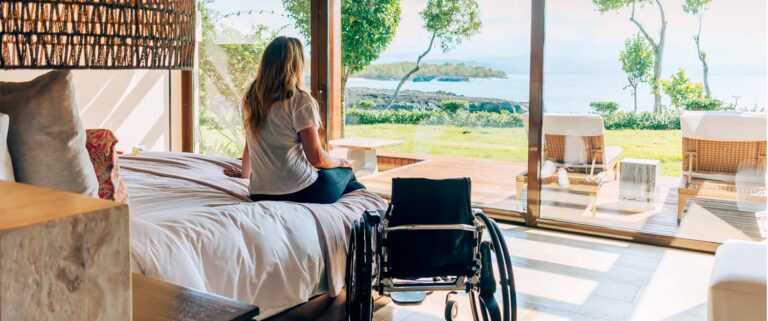
To grasp the current state of luxury mobility travel in America, one must first dismantle the oversimplification that accessibility is a monolithic binary. It is not a matter of a property being “accessible” or “not.” Instead, in the premium tier, it is a spectrum of utility where the highest level of service is characterized by “invisible assistance.” This means the environmental adaptations are so well-integrated into the design language, such as a handrail that appears as a decorative architectural detail or a roll-in shower finished in rare book-matched marble,e that they serve the guest without defining the space.
The Misunderstanding of Compliance vs. Experience
A frequent misunderstanding among hospitality providers is that meeting the Americans with Disabilities Act (ADA) standards is equivalent to providing a luxury experience. In reality, ADA standards are a legal floor, not a ceiling. A luxury suite that technically meets the turning-radius requirements for a wheelchair but features high-pile carpet that makes self-propulsion exhausting is a functional failure. Topical authority in this space requires recognizing that true luxury is the marriage of legal compliance with ergonomic ease and aesthetic parity.
Oversimplification of the “Mobility” Label
The “mobility” label itself is often oversimplified to mean wheelchair users exclusively. In the luxury sector, this segment actually encompasses a much broader demographic: aging high-net-worth individuals who may not identify as “disabled” but require lower-impact environments, travelers recovering from acute injuries, and those with chronic conditions that affect stamina. The risk of oversimplification is that a destination might solve for a wheelchair while failing to solve for the guest who can walk but cannot navigate a three-step elevation change into a dining room.
Deep Contextual Background
The trajectory of mobility-centric luxury in the United States is intrinsically linked to the 1990 passage of the ADA, but its “luxury” specific evolution didn’t gain momentum until the mid-2010s. Historically, high-end properties, particularly historic grand hotels in cities like Boston or New Orleans, were granted various exemptions or simply retrofitted in ways that felt secondary. The accessible room was often the “least desirable” room—located near the service elevator or lacking the premier views afforded to standard suites.
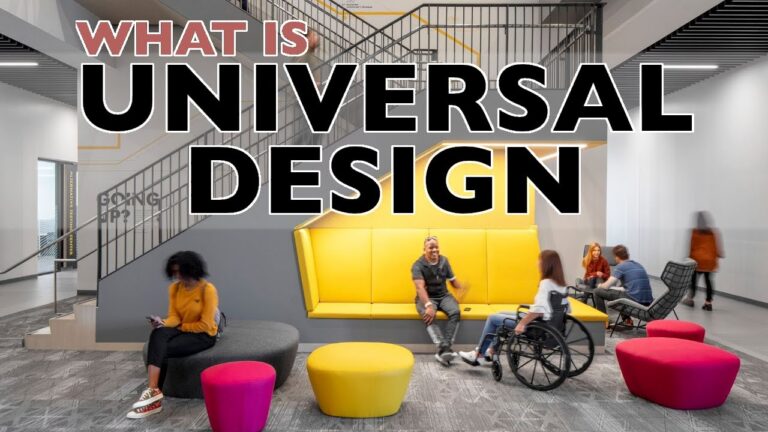
The shift toward the current Integrated Inclusion Era (post-2020) was driven by two factors: the aging of the Baby Boomer generation, who hold significant wealth and refuse to stop traveling despite mobility changes, and the rise of “Universal Design” as a mainstream architectural philosophy. Modern luxury builds in the U.S. now treat accessibility as a primary design constraint rather than a late-stage add-on. This has led to the development of purpose-built inclusive hubs in destinations like Scottsdale, Las Vegas, and Miami, where the infrastructure, from wide sidewalks to beach-accessible mattresses, supports a seamless high-end lifestyle.
Conceptual Frameworks and Mental Models
To evaluate the efficacy of a luxury mobility offering, we can apply several mental models that move beyond a simple checklist.
1. The Frictionless Path Model
This framework views the guest journey as a single, unbroken chain of events. If a traveler can fly first-class and stay in a flagship suite but faces a broken lift at a local museum or an inaccessible van for a vineyard tour, the “luxury” of the trip evaporates.
-
The Limit: This model is difficult to execute in older, decentralized American cities where the private property (hotel) is inclusive, but the public infrastructure (sidewalks/transit) is not.
2. The Aesthetic Parity Framework
This model dictates that every accessible feature must match the material quality and design intent of the standard offering. If a standard room has custom oak furniture, the accessible room cannot substitute it for laminate for the sake of “durability.”
-
The Limit: High-end finishes (like slick polished marble) often conflict with safety requirements (slip resistance), requiring a compromise that tests the designer’s ingenuity.
3. The Autonomy vs. Assistance Matrix
Luxury is often defined as “having everything done for you,” but for the mobility traveler, luxury is often “being able to do it yourself.”
-
The Framework: The highest tier of service provides the option for assistance without the requirement for it.
-
The Limit: Over-automating a room (voice-controlled everything) can sometimes create a new barrier if the interface is not intuitive or if the technology fails.
Key Categories or Variations
The landscape of luxury mobility travel in America is divided into several specialized categories, each with distinct trade-offs.
| Category | Defining Feature | Trade-off |
| Urban Flagship | High-tech automation, proximity to transit/medical. | Limited square footage; potential for “urban noise” sensory load. |
| Purpose-Built Resort | Expansive floor plans, zero-entry pools. | High seasonal cost; often requires a rental car/van. |
| Private Villa/Estate | Maximum privacy, curated on-site staff. | Variable maintenance; no 24/7 on-site “front desk” support. |
| Luxury Rail/Cruise | “Floating” or “Moving” hotel; no packing/unpacking. | Fixed itineraries; limited cabin sizes in historic rail stock. |
| Adventure/Eco-Luxury | Adaptive gear for “wild” environments (beach/mountains). | Remote locations; limited emergency medical proximity. |
Decision Logic for Travel Selection
When selecting a category, the decision hinges on the “Support-to-Autonomy” ratio. An Urban Flagship is superior for a traveler who wants to navigate a city independently using public infrastructure, whereas a Private Estate is the logical choice for those who prefer to have a controlled environment where the staff is briefed on their specific physical requirements before arrival.
Detailed Real-World Scenarios
Scenario 1: The “Historic Grandeur” Conflict
A guest books a premier suite in a historic Charleston hotel. While the room is ADA-compliant, the path from the lobby involves a “hidden” lift that feels like a freight elevator.
-
Constraint: Preservation laws prevent the modification of the main staircase.
-
Decision Point: Does the hotel offer a “seated check-in” in a private parlor to bypass the lobby friction?
-
Failure Mode: The guest feels “relegated” to the service entrance, breaking the psychological luxury of the stay.
Scenario 2: The Beachfront Resort “Last Mile”
A Five-Diamond resort in Maui offers accessible rooms, but the path to the private beach cabana involves traversing deep sand.
-
Second-Order Effect: The guest is confined to the pool area, despite paying for “beachfront” access.
-
Resolution: The installation of permanent, high-design “Mobi-mats” or the provision of a luxury electric beach wheelchair.
Planning, Cost, and Resource Dynamics
The economic reality of luxury mobility travel involves a “Complexity Tax”—the indirect costs of ensuring a seamless experience.
| Cost Driver | Range-Based Impact | Reason for Variability |
| Accessible Van Rental | $150 – $350 per day | Scarcity of luxury-tier accessible vehicles (e.g., Mercedes Sprinter). |
| Direct-to-Room Check-in | Include up to $500 | Often requires a dedicated “Inclusion Concierge” staff member. |
| Specialized Equipment Rental | $50 – $200 per day | Delivery fees for hospital-grade beds or high-end hoists. |
| Lodging Premium | 0% – 20% | Legal parity usually prevents higher room rates, but “upgraded” accessible suites are rare. |
The Opportunity Cost of a failed trip is the primary motivator for the luxury mobility traveler. For this demographic, a “lost” vacation due to an inaccessible bathroom or a broken elevator isn’t just a financial loss; it is a loss of limited physical energy and time, leading to a much higher demand for “verified” itineraries.
Tools, Strategies, and Support Systems
Modern mobility travel relies on a sophisticated ecosystem of support:
-
3D Matterport Tours: Providing exact, measurable dimensions of a suite before booking to verify bed heights and clearances.
-
Inclusion Concierges: Specialized travel advisors who personally vet properties and test the “functional flow” of an itinerary.
-
Adaptive Equipment Networks: Services that deliver “luxury” mobility aids (carbon-fiber wheelchairs, sleek scooters) to the hotel.
-
Digital Accessibility Maps: Apps that track the real-time “working” status of elevators and lifts in major U.S. cities.
-
Private Aviation Medical Clearance: Dedicated flight nurses and mobility-trained cabin crews for long-haul domestic travel.
-
“Pre-Arrival Interviews”: A formal process where the hotel’s head of housekeeping discusses the guest’s specific furniture-placement needs 72 hours before arrival.
Risk Landscape and Failure Modes
The “Risk Taxonomy” in this niche is defined by compounding failures. A single broken lift is a nuisance; a broken lift combined with a staff member who doesn’t know where the alternative ramp is located is a catastrophe.
-
Information Asymmetry: Discrepancy between a website’s “Accessible” label and the reality (e.g., a 2-inch “lip” at the door).
-
Mechanical Drift: A pool lift that hasn’t been tested in six months, failing the moment a guest needs it.
-
Service Ghosting: The hotel promises an accessible shuttle, but the driver “on shift” isn’t trained to operate the ramp.
-
Maintenance “Oversight”: Housekeeping moving furniture for cleaning and inadvertently blocking a 60-inch turning circle.
Governance, Maintenance, and Long-Term Adaptation
Properties that lead in luxury mobility travel in America maintain their status through rigorous internal governance. This is not a “set it and forget it” feature.
Layered Checklist for Properties
-
Daily: Housekeeping check of all grab-bar stability and “clear floor space” maintenance.
-
Monthly: Mechanical load-testing of all lifts (pool, spa, and vehicle).
-
Quarterly: Staff “empathy audits” where employees navigate the property using various mobility aids to identify new friction points.
-
Annually: Review of digital accessibility assets (website/app) to ensure compatibility with new screen-reading technology.
Measurement, Tracking, and Evaluation
How is “Inclusion Success” measured?
-
The “Silent” Metric: The highest praise for an accessible luxury suite is when a non-disabled guest stays in it and doesn’t notice it was designed for accessibility; they just think it’s a spacious, well-designed room.
-
Leading Indicators: Percentage of staff who have completed advanced inclusion training; frequency of “verified” measurements updated on the website.
-
Lagging Indicators: Repeat booking rates among the mobility segment; sentiment analysis of travel reviews mentioning “ease of access.”
-
Documentation Examples: Maintenance logs for pool lifts, pre-arrival briefing notes, and “post-stay” feedback loops specifically for the mobility experience.
Common Misconceptions and Oversimplifications
-
Myth: “ADA-compliant means it’s good for everyone.” Correction: ADA is a minimum standard; it does not account for the height of a luxury bed (often too high) or the weight of a heavy designer door.
-
Myth: “Mobility issues are only for the elderly.” Correction: This segment includes athletes, families with strollers, and young adults with chronic conditions.
-
Myth: “Accessible rooms are always available.” Correction: Because properties only have a few, they are often the first to book out during peak seasons.
-
Myth: “You can’t have luxury and grab bars.” Correction: High-end manufacturers now produce grab bars in finishes like brushed gold or matte black that look like intentional design accents.
Conclusion
The future of luxury mobility travel in America is one of “Radical Normalization.” As the industry moves away from seeing accessibility as a “special request” and toward seeing it as a fundamental design baseline, the distinction between “standard” and “accessible” luxury will continue to blur. For the high-net-worth traveler, the ultimate value is no longer just the destination; it is the confidence that their physical journey will be met with the same level of intellectual and aesthetic respect as any other guest. The properties and destinations that thrive will be those that recognize inclusion not as a legal obligation, but as the most sophisticated expression of hospitality excellence.