Handicap Travel Overview: The Definitive Guide to Inclusive Mobility
The globalization of leisure and professional mobility has historically been predicated on a narrow definition of the “standard” traveler, an able-bodied individual for whom the built environment presents few, if any, structural obstacles. However, as the demographic profile of the global population shifts toward an older, more diverse composition, the travel industry is facing a necessary reckoning. What was once dismissed as a niche segment of “specialized travel” is now understood as a fundamental pillar of modern tourism infrastructure. The move toward universal design and inclusive logistics is no longer a matter of optional hospitality; it is a critical requirement for any destination seeking long-term economic and social viability.
Designing for accessibility in a global context requires an analytical depth that transcends simple compliance with local regulations, such as the Americans with Disabilities Act (ADA). True mastery in this field involves understanding the “interconnected chain of mobility,” where a single failure in a transit link, a lodging amenity, or a sensory environment can invalidate an entire itinerary. For the modern traveler navigating these complexities, the available information is often fragmented, superficial, or outdated. There is a profound need for a systemic deconstruction of the logistical, social, and technical layers that define the contemporary landscape of inclusive movement.
Understanding “handicap travel overview.”
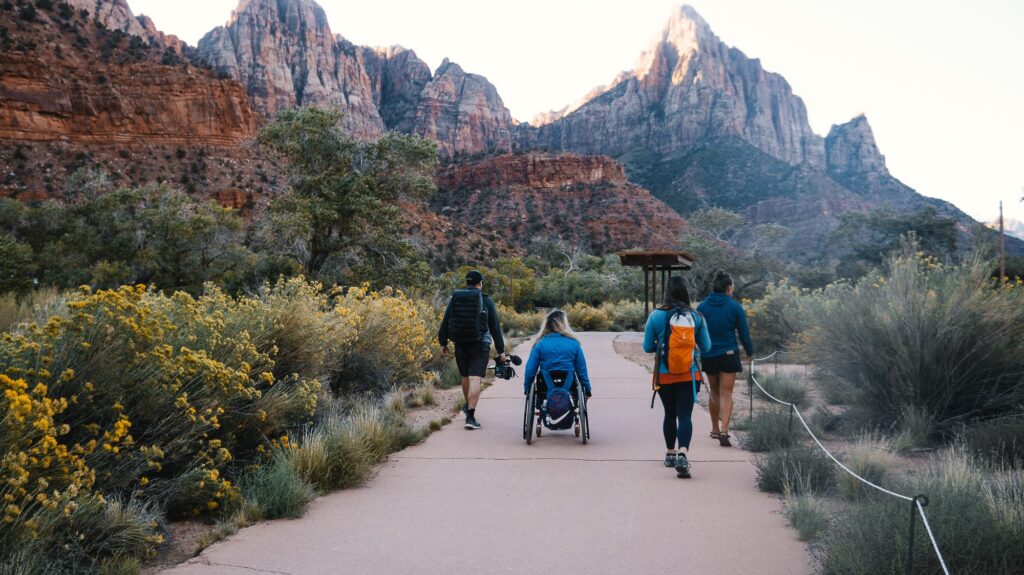
To provide a comprehensive handicap travel overview, one must first acknowledge the linguistic and conceptual shift occurring within the industry. While “handicap” remains a common search term and legal descriptor in various jurisdictions, professional editorial standards have moved toward “accessible” or “inclusive” travel. This transition reflects a move away from the “Medical Model” of disability, which views the individual as the problem to be fixed, toward the “Social Model,” which posits that disability is created by the barriers present in a poorly designed environment.
Multi-Perspective Utility
From a logistical perspective, a travel overview is a map of “Functional Flow.” It evaluates whether a traveler can move from a point of origin to a destination with the same degree of predictability as any other person. From an economic perspective, it is an analysis of the “Purple Dollar”—the immense but often ignored spending power of disabled travelers and their families. To oversimplify this field as merely “traveling with a wheelchair” is a significant strategic error. It ignores the millions of travelers with invisible disabilities, including neurodivergence, chronic pain, sensory processing disorders, and respiratory requirements.
The Risk of Fractional Planning
The primary risk in the current landscape is “fractional planning.” A traveler might find an accessible hotel but discover the local transit system uses high-floor buses, or they might book a flight only to find the “last mile” from the airport to the city center is unpaved. A true overview must treat travel as a single, unbroken chain of events. If any link in that chain fails, the entire journey is compromised.
Contextual Evolution: From Segregation to Universal Design
The history of inclusive travel in the United States and abroad is a story of reactive policy becoming proactive design. In the mid-20th century, travel for those with physical impairments was largely segregated. Specialized “handicapped tours” were the only option, often relegated to specific seasons or low-demand destinations. These tours were characterized by a “caretaker” philosophy, where the traveler’s autonomy was secondary to the convenience of the provider.
The passage of the ADA in 1990 served as a massive catalyst for structural change, but its initial implementation was often “retrofit-based.” We saw the addition of clunky external lifts and the conversion of storage closets into “accessible” bathrooms. Today, we have entered the era of Universal Design. Architects and planners are now “building-in” accessibility from the ground up. Wide thoroughfares, zero-entry showers, and acoustic dampening are no longer viewed as “handicap features” but as premium design elements that benefit everyone, from the parent with a stroller to the business traveler with heavy luggage.
Conceptual Frameworks for Evaluating Mobility
To assess the viability of a destination or itinerary, we can apply several rigorous mental models.
1. The “Continuous Path” Model
This framework posits that a destination’s accessibility is defined by its most restrictive point.
-
The Logic: One step can be as insurmountable as a mountain. If a 1:12 slope is interrupted by a single two-inch lip, the path is broken.
-
The Limit: This model is binary; it does not account for the “effort-to-reward” ratio that some travelers are willing to accept in natural or historical settings.
2. The “Cognitive Load” Framework
This model focuses on the mental energy required to navigate a space.
-
The Logic: Travel is inherently stressful. A space that is cognitively accessible uses intuitive wayfinding, clear contrast, and predictable layouts to reduce the traveler’s anxiety.
-
The Limit: Designing for low cognitive load can sometimes lead to sterile, overly simplified environments that lack the character travelers seek.
3. The “Social Integration” Framework
This model evaluates whether inclusive features facilitate or hinder social interaction.
-
The Logic: Does the accessible seating at a stadium allow a traveler to sit with their friends, or are they exiled to a “handicapped section” in the back?
-
The Limit: Integration must be balanced with the need for specific, high-functioning amenities that may require some degree of separation for safety.
Key Categories of Inclusive Travel and Their Trade-offs
Travel styles are increasingly categorized by the primary “barrier” they address. Understanding these allows for more realistic decision logic.
| Category | Primary Focus | Best Case Scenario | Critical Trade-off |
| Mobility-Centric | Zero-step, lift-heavy | Modern cruise ships, New York hubs | High dependency on mechanical uptime. |
| Sensory-Filtered | Low noise, controlled light | “Quiet” museum hours, autism-certified resorts | Restricted schedules; may miss “peak” vibes. |
| Cognitive-Predictive | High routine, social scripts | Theme parks (Disney/Universal) | High cost; often requires “enclosed” environments. |
| Medically Supported | Oxygen, dialysis, and nursing | “Care-hotel” models in Europe | Very high cost; feels more clinical than recreational. |
| Adaptive Adventure | Specialized gear (Joëlettes) | National Parks with “all-terrain” rentals | Requires booking and physical assistance. |
Realistic Decision Logic
The choice between these categories is rarely absolute. Most travelers operate in a “hybrid” mode. The decision logic should be based on the “Failure Recovery” potential: “If the elevator at this hotel breaks, do I have a Plan B?” If the answer is no, the destination is too high-risk for that traveler’s specific needs.
Real-World Scenarios and Operational Decision Points
The Historical City Dilemma
A traveler wishes to visit a medieval city in Italy. The cobblestones are authentic and protected by heritage laws, but they are impossible for a manual wheelchair.
-
Decision Point: Does the traveler rent a power add-on for their chair, or do they pivot to a modern “accessible” city nearby?
-
Second-Order Effect: Choosing the historical city may result in “physical debt”, extreme fatigue that ruins the subsequent three days of the trip.
The Multi-Modal Transit Failure
A traveler is taking a train from London to Paris. The “verified” accessible seat is double-booked by the system.
-
Constraint: The next accessible train is six hours away.
-
Failure Mode: Accepting a non-accessible seat “just this once,” leading to a safety risk during the journey.
-
Strategic Pivot: Invoking the “Inclusion Guarantee” (if available) to secure private car transport at the rail company’s expense.
Planning, Cost, and Resource Dynamics
Inclusive travel frequently carries an “Inclusion Premium.” This is not necessarily a price-gouge by providers, but a reflection of the higher operational costs of specialized logistics.
| Item | Estimated Range | Frequency of Cost |
| Pre-Trip Verification (Scouts) | $150 – $500 | Per destination |
| Adaptive Equipment Rental | $50 – $250 | Per day |
| “Buffer” Days (Stamina) | $200 – $600 | Per 3 days of travel |
| Specialized Transit (Private) | 2x – 4x Standard | Per transfer |
The Opportunity Cost of “cheap” planning is high. A non-accessible room booked via a discount site may result in a traveler being unable to shower or enter the building, forcing an emergency booking at a much higher “walk-in” rate.
Support Ecosystems: Tools and Strategies
The “modern toolkit” for inclusive travel has shifted from paper guides to real-time data:
-
LiDAR Mapping Apps: Allow travelers to measure door widths and bed heights via their smartphone sensors.
-
Sensory Maps: Digital overlays that show decibel levels and crowd density in major tourist attractions.
-
Haptic Wayfinding: Wearable tech that vibrates to guide visually impaired travelers through complex terminals.
-
Verified Scout Networks: Services that send human auditors to “stress-test” a hotel room before the guest arrives.
-
Adaptive Equipment “Chains”: Services like ScootAround that allow a traveler to pick up a scooter in Miami and drop it off in Los Angeles.
-
Social Scripts / Visual Stories: PDF or video walkthroughs used by neurodivergent travelers to “pre-experience” a flight or hotel check-in.
Risk Taxonomy and Compounding Failure Modes
Risk in this field is rarely about a single incident; it is about the “Compounding Cascade.”
-
Mechanical Decay: A lift that worked yesterday breaks today; the technician is 48 hours away.
-
Information Asymmetry: The website says “accessible,” but the staff doesn’t know where the ramp key is kept.
-
Environmental Drift: A sidewalk that was navigable in June is blocked by snow or outdoor dining in December.
-
Human Factor Error: A well-meaning flight attendant insists on “lifting” a passenger, leading to a back injury for the staff and a dignity violation for the traveler.
Governance, Maintenance, and Long-Term Adaptation
For a destination to remain accessible, it requires a “circular governance” model. This involves:
-
The Audit Cycle: Physical inspections every 6 months to check for “settling” in ramps or wear-and-tear on tactile paving.
-
Adjustment Triggers: A formal system where guest complaints about accessibility are fast-tracked for engineering review within 24 hours.
-
Staff Continuity: Training programs that are part of onboarding, ensuring that “how to use the pool lift” isn’t knowledge held by only one person.
-
The “Lived Experience” Panel: A permanent group of disabled consultants who review all new infrastructure plans before they are finalized.
Measurement and Evaluation: Tracking Success
How do we quantify the quality of an inclusive travel experience?
-
The “Dignity Quotient”: A qualitative score based on how many times a traveler had to ask for “special” help. (Target: Zero).
-
Uptime of Critical Links: The percentage of time that elevators, lifts, and automated doors were functional during the trip.
-
Dwell Time Variance: Comparing how long a disabled traveler stays at an attraction versus an able-bodied one. If the disabled traveler leaves earlier, the environment is likely “hostile.”
-
Documentation Examples: Real-world maintenance logs for adaptive equipment and “Secret Shopper” reports from auditors with disabilities.
Common Misconceptions and Oversimplifications
-
Myth: “The ADA covers everything.”
Correction: The ADA is a floor, not a ceiling. It ensures access, but it doesn’t ensure quality or joy. -
Myth: “Accessible travel is just for the elderly.”
Correction: Millions of young people have chronic illnesses, mobility needs, or neurodivergence. -
Myth: “If a hotel has an elevator, it’s fine.”
Correction: Small elevators often cannot accommodate modern power chairs or “last-mile” medical gear. -
Myth: “You can just use Google Maps to find ramps.”
Correction: Google Maps often misses “micro-barriers” like a two-inch step or a broken curb ramp. -
Myth: “Cruise ships are 100% accessible.”
Correction: Shore excursions are notoriously difficult to verify, often involving “tender” boats that are inaccessible. -
Myth: “Sensory-friendly just means quiet.”
Correction: It also involves lighting (no flickering LEDs), scent (no heavy perfumes), and visual predictability.
Conclusion
The evolution of the global travel landscape toward inclusive design is not merely a logistical upgrade; it is a fundamental expansion of the human experience. As this handicap travel overview has demonstrated, the success of a journey depends on the integrity of the “mobility chain,” a delicate weave of physical infrastructure, digital accuracy, and human empathy. The future of travel belongs to those destinations and providers who view accessibility not as a burden of compliance, but as a hallmark of excellence. By prioritizing autonomy, reducing cognitive load, and maintaining rigorous oversight, we can move toward a world where the act of exploration is a universal right, unburdened by the barriers of the past. The goal is a world where “inclusive travel” is simply known as “travel.”