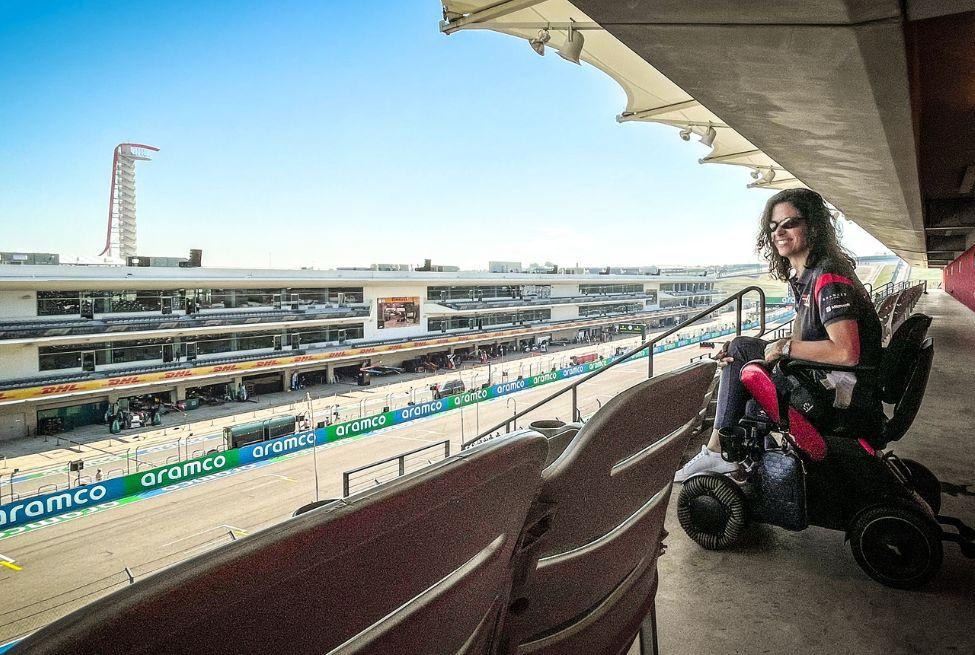
Top Wheelchair Experiences in America: The 2026 Master Guide
The concept of a “travel experience” for a wheelchair user has undergone a radical transformation from a niche logistics puzzle to a sophisticated sector of the American leisure economy. In the early 21st century, accessibility was often treated as a peripheral compliance obligation, a ramp added to a back entrance or a single “handicap” stall in a vast stadium. By 2026, the paradigm has shifted toward “Inclusive Excellence,” where the most sought-after destinations are those that have integrated universal design into their primary architectural and experiential DNA. This evolution is not merely about physical access; it is about the “Dignity of Autonomy,” the ability for a traveler to navigate high-value spaces without the friction of constant assistance or secondary routing.
Across the American landscape, the density of these high-utility environments is highly localized. We see a divergence between “Legacy Cities,” struggling with the topographical and structural debts of the 19th century, and “Purpose-Built Destinations” that leverage modern engineering to conquer natural barriers. The challenge for the modern traveler lies in discerning the difference between a “Compliant Destination” (one that meets legal minimums) and a “High-Value Experience” (one that maximizes the ratio of visual/cultural impact to physical effort). Identifying these centers of excellence requires a forensic approach to travel planning, looking past marketing gloss to interrogate the underlying logistical systems.
Understanding “top wheelchair experiences in America.”
To define top wheelchair experiences in America, one must move beyond the surface-level “accessible” tag. A top-tier experience is characterized by “Invisible Inclusio,n” an environment where the accessible route is not an alternative, but the primary path. In many historic American sites, the “accessible” route takes the visitor through service elevators or loading docks, effectively stripping the experience of its aesthetic or historical context. A truly superior experience maintains the “Narrative Integrity” of the site, ensuring that a wheelchair user encounters the same vistas, exhibits, and atmosphere as any other guest.
A common misunderstanding in this sector is that “Access” is a binary state, te either a place is accessible, or it isn’t. In reality, it is a gradient of “Mechanical Compatibility.” A destination might be perfectly accessible for a manual wheelchair user with strong upper-body function, yet entirely impassable for a 400-pound power chair with low ground clearance. Identifying the best experiences requires a “Technical Match” between the user’s specific equipment and the destination’s topography. Oversimplification risks lead to “Information Drift,” where a traveler arrives at a “top-rated” site only to find the “stabilized gravel” path is too soft for their specific tires.
Furthermore, these experiences must be evaluated through the lens of “Systemic Reliability.” A single broken elevator at a National Park overlook, or a malfunctioning lift on a ci, ty bus can instantly downgrade a “top” experience to a logistical failure. Therefore, the highest-rated experiences in 2026 are found in “High-Redundancy Zones” areas where multiple layers of accessible infrastructure exist simultaneously. This allows the traveler to “Pivot” in real-time, maintaining their itinerary despite localized equipment failures.
Deep Contextual Background: The Historical Inversion of Access
The American adaptive experience began in the shadows of the post-WWII era, driven by the needs of returning veterans. This was the “Medicalized Era,” where accessibility was confined to hospitals and rehabilitation centers. The 1960s and 70s saw the rise of the “Civil Rights Model,” culminating in the 1990 Americans with Disabilities Act (ADA). This was the most significant turning point, shifting the burden of access from the individual to the state and the private sector. It mandated a “Retrofit of a Continent,” a multi-decade project to carve ramps into stone and install lifts in steel.
By the 2010s, we entered the “Universal Design Era.” Architects began to realize that features like curb-less entries, wide corridors, and intuitive wayfinding benefited everyone, not just those with mobility aids. This led to the creation of “Seamless Hubs” like the renovated Museum of Modern Art (MoMA) in New York or the waterfronts of Seattle and Chicago. In these spaces, the wheelchair user is no longer a “special case” but a “standard user” for whom the building was fundamentally designed.
In 2026, the context has shifted to “Augmented Access.” The physical environment is now overlaid with a digital layer—real-time sensor data on elevator status, high-resolution topographical maps, and virtual “pre-walk” tours. The modern “top experience” is one that leverages this digital layer to provide “Certainty of Outcome.” We have moved from a world where we hop to get in, to a world where we verify the entrance before leaving our homes.
Conceptual Frameworks for Mobility Auditing
1. The “Path of Travel” Continuity Loop
This framework treats an experience as a single, unbroken chain. If the destination is a “top” museum, but the nearest accessible parking is half a mile away over uneven pavement, the “Chain” is broken. Auditing an experience requires looking at the “Handoffs” between transit, arrival, and the main activity.
2. The “Mechanical Identity” Variable
Every wheelchair has a “Mechanical Identity” (width, weight, battery type, turning radius). A top experience accommodates the “Outer Envelope” of these variables. If a scenic overlook has a “compliant” 32-inch opening, but the average modern power chair is 31.5 inches, the “Tolerance” is too low for a stress-free experience.
3. The “Atmospheric Load” Assessment
This model analyzes the sensory and cognitive cost of an environment. A high-density tourist hub (like Times Square) has a high “Atmospheric Load,” which can lead to rapid fatigue for users who must constantly navigate crowd-induced “Micro-Barriers.” Top experiences are those that manage crowd flow to protect the “Manuevering Space” of adaptive users.
Key Categories of Experiences and Strategic Trade-offs
The American landscape offers diverse “Inclusion Profiles.” Each carries a specific trade-off between “Authenticity” and “Ease.”
| Category | Typical Example | Strategic Trade-off | Success Metric |
| Federal Managed Lands | Yellowstone National Park | Wild Nature vs. Paved Access | Boardwalk Continuity |
| Revitalized Urban Waterfronts | Chicago Riverwalk | Urban Density vs. Level Grading | Incline Ratios |
| Purpose-Built Cultural Hubs | The Getty Center (LA) | Isolation vs. Perfect Inclusion | Elevator Redundancy |
| Historic Retrofits | Charleston, SC | Cultural Depth vs. Surface Friction | Cobblestone Mitigation |
| Adaptive Adventure Zones | Park City (Skiing) | Physical Risk vs. Equipment Support | Tech Availability |
| Coastal Boardwalking | Santa Monica Pier | Salt/Sand Exposure vs. Ocean Access | Decking Integrity |
Decision Logic: The “Adventure-to-Certainty” Ratio
When choosing a destination, the traveler must decide where they sit on the “Friction Spectrum.” A “Certainty” seeker should prioritize the Purpose-Built Hubs (like Las Vegas or D.C.), where the environment is engineered for 99% reliability. An “Adventure” seeker might choose the National Parks, accepting that a mudslide or a fallen tree could render a trail inaccessible at any moment, necessitating a “High-Flex” itinerary.
Detailed Real-World Scenarios
The “Vertical Displacement” Crisis in San Francisco
-
The Context: A traveler wants to visit the top of Lombard Street.
-
The Problem: The extreme gradient makes manual pushing impossible and can cause power chairs to “trip” their safety sensors.
-
The Management: Utilizing the city’s “Cable Car” system, which in 2026 has specific accessible bays on certain lines, allowing the user to bypass the “Vertical Load” while still experiencing the iconic transit.
The “Sub-Surface” Failure in a National Park
-
The Context: A user visits the Mammoth Cave National Park.
-
The Constraint: Only certain sections are accessible via a specialized elevator.
-
The Failure Mode: The elevator goes down for maintenance.
-
The Pivot: The traveler has pre-registered for the “Accessible Discovery” tour, which provides a dedicated ranger who can pivot the group to an above-ground geological trail that mimics the cave’s formations until the lift is restored.
Planning, Cost, and Resource Dynamics
The “Cost of Inclusion” in the US is often an upfront capital investment. While many public spaces are free, the “Support Layer” required to reach them is not.
Range-Based Resource Comparison (10-Day Domestic Trip)
| Resource | “Economy” (Reactive) | “Premium” (Proactive) | Risk Reduction |
| Transport | Standard Rental + Lift | Custom WAV Rental | High |
| Lodging | Brand-Standard “ADA” | Universal Design Suite | Medium |
| Vetting | Google Maps/DIY | Professional Access Auditor | Very High |
| Equipment | Personal Chair Only | Spare Parts/Backup Rental | High |
| Total Est. | $3,500 | $8,500 | 80% Failure Reduction |
The “Indirect Cost” of Time: In accessible travel, time is a currency. A “compliant” route through a stadium might take 15 minutes longer than the stairs. A “top experience” is one where this “Time Tax” is minimized through intelligent floor-planning and prioritized elevator banks.
Tools, Strategies, and Support Systems
-
High-Resolution Topographical Apps: Moving beyond 2D maps to 3D “Incline Mapping” to ensure a “level” street isn’t actually a 12% grade.
-
Portable “Threshold” Ramps: A lightweight, carbon-fiber ramp (2-4 inches) carried in the chair’s side-pocket to neutralize the “One-Step Barrier” found in historic urban shops.
-
TSA Cares / Airline Accessibility Desks: Utilizing the federal “Security Escort” system to navigate the sensory and physical chaos of US airport hubs.
-
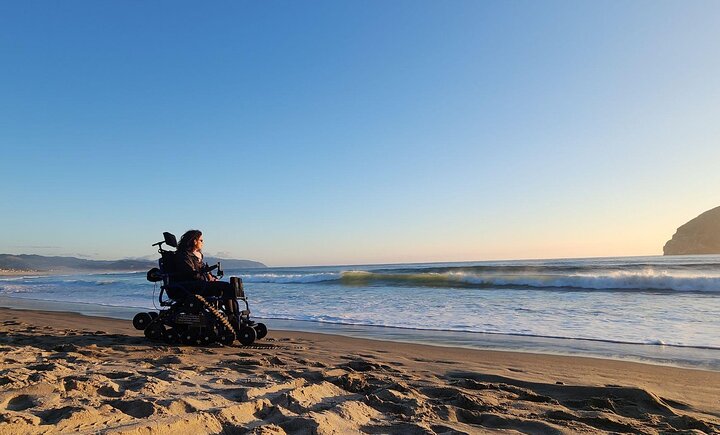
Specialized National Park “All-Terrain” Rentals: Many parks now offer “Track-Chairs” (tread-based mobility aids) that can be reserved in advance, allowing a user to leave the boardwalk and enter the actual forest.
-
Bluetooth “Beacon” Navigation: In major museums, these provide turn-by-turn directions specifically for the “Elevator Path,” avoiding the confusion of multi-level galleries.
-
The “Laminated Maintenance Manual”: For power chair users, having a multi-lingual, visual guide on how to put the chair in neutral or where to lift ensures that if a breakdown occurs, local help doesn’t cause further damage.
Risk Landscape: A Taxonomy of Compounding Failures
1. The “Information Lag” Failure
A website says “Accessible” but hasn’t been updated since a renovation added a decorative step. This “Digital Ghosting” is the most common cause of trip failure.
2. The “Last-Mile” Isolation
The hotel is perfect, and the attraction is perfect, but the two blocks between them lack “Curb Cuts” or have broken pavement. This renders the “Top Experience” unreachable despite its internal quality.
3. The “Mechanical Asset” Compromise
Domestic airlines in the US still struggle with mobility aid handling. If a chair is damaged in the cargo hold at the start of the trip, the entire “Experience” collapses. Risk management requires a “Loaner Contingency” at the arrival city.
Governance, Maintenance, and Long-Term Adaptation
A “Top Experience” is not a static state; it is a result of “Active Governance.”
The “Site Integrity” Checklist
-
Frequency of Lift Maintenance: Does the site have a daily testing protocol for its accessible equipment?
-
Staff “Soft-Skills” Training: Can staff handle an adaptive emergency with dignity, or do they default to “Medicalizing” the guest?
-
Feedback Loops: Does the destination have a public-facing portal where users can report “Micro-Barriers” like a heavy door or a broken sensor?
Measurement, Tracking, and Evaluation
-
Leading Indicator: “The Spontaneity Score.” The percentage of the itinerary that can be completed without a pre-arranged “Special Appointment” or “Key Holder.”
-
Lagging Indicator: “Incident Rate.” The frequency of “Mechanical Friction” (e.g., getting stuck, needing a push, being denied entry).
-
Qualitative Signal: “Narrative Parity.” A documentation of whether the wheelchair user saw the same “Flagship Exhibits” as the non-disabled guests.
Common Misconceptions and Ethical Paradoxes
-
Myth: “Modern means accessible.”
Correction: Some modern “minimalist” designs lack grab bars or have glass walls that are hazardous for those with low-vision or depth-perception issues. -
Myth: “The ADA solved everything.”
Correction: The ADA is a legal floor; it does not mandate “Ease of Use,” only “Access.” -
The Paradox of “Paving the Wild”:
Correction: The ethical debate over whether National Parks should pave more trails. From an “Inclusion Authority” standpoint, the answer is “Universal Access” through low-impact, permeable materials that protect the ecology while opening the view.
Conclusion:
The current landscape of top wheelchair experiences in America is a testament to the power of systemic design. We are moving away from an era of “Special Accommodations” and into an era of “Inherent Inclusion.” The most prestigious destinations in the US are no longer those with the most “Ramps,” but those with the most “Thoughtful Layouts.” For the traveler, the goal is to become a “Logistical Architect” using the tools of digital vetting, mechanical matching, and risk management to build a journey that is defined by the destination’s beauty rather than its barriers. In 2026, the frontier is open, provided one has the maps to navigate it.