Accessible Tour Examples: A Deep Dive into Inclusive Tourism Design
The democratization of the travel experience represents a profound shift in how we conceptualize public and private tourism infrastructure. For decades, “accessibility” was treated as a secondary logistical hurdle, a series of retrofitted ramps or elevators added to satisfy basic legal mandates. However, a new paradigm has emerged that views the tour not merely as a route, but as a complex ecosystem of sensory, cognitive, and physical interactions. This evolution is driven by a recognition that the global traveler profile is diversifying, necessitating a more rigorous approach to itinerary design that prioritizes dignity and autonomy over mere “access.”
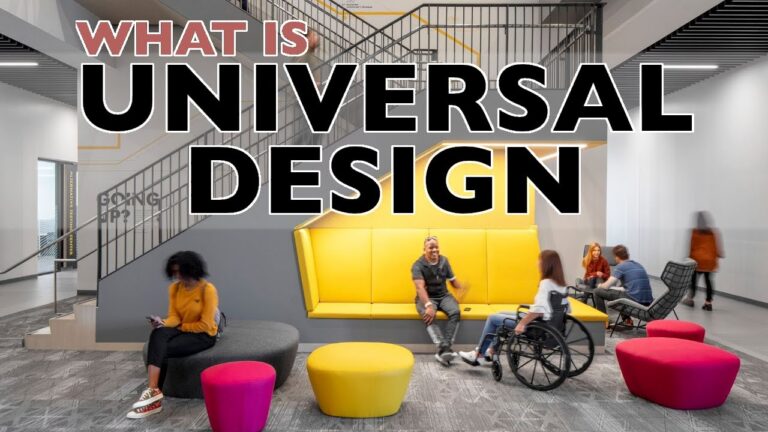
Designing an effective tour in this modern context requires a deep understanding of “Universal Design” principles, where the environment is inherently usable by all people without the need for specialized adaptation. This moves the conversation beyond simple physical barriers and into the realm of cognitive load, sensory regulation, and the “invisible” logistics that define a high-quality experience. When a tour is truly inclusive, the architecture of the journey becomes invisible, allowing the participant to engage fully with the destination rather than the mechanics of moving through it.
This analysis aims to provide a definitive reference for the systemic structures that define modern inclusive tourism. By examining high-level editorial perspectives, historical evolutions, and the risks inherent in complex logistics, we establish a framework for understanding how tours can be built to withstand the scrutiny of an increasingly discerning and diverse global audience. We are no longer planning for a “typical” traveler; we are planning for the reality of the human condition in all its variations.
Understanding “accessible tour examples.”
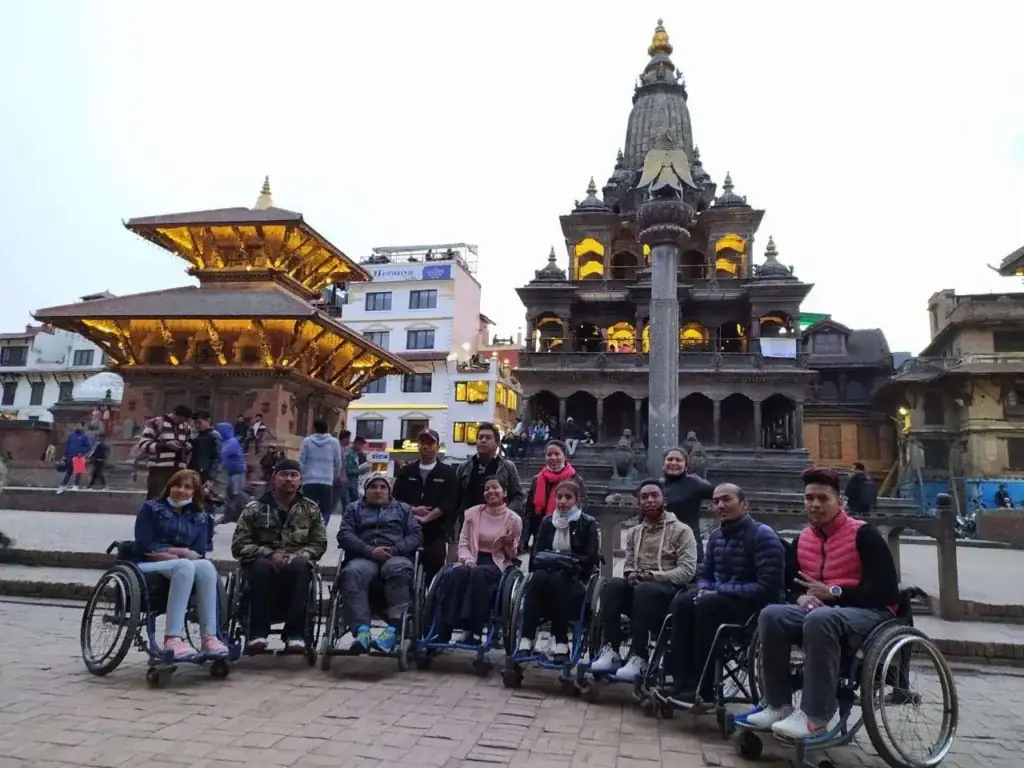
To evaluate accessible tour examples with any degree of professional rigor, one must first deconstruct the pervasive “checklist” mentality. In the travel industry, there is a recurring error where a tour is labeled “accessible” because it avoids stairs. This is an oversimplification that ignores the multi-dimensional needs of the traveler. A tour that is physically navigable but lacks auditory descriptions for the visually impaired, or quiet zones for the neurodivergent, is not truly accessible; it is merely “step-free.”
The Multi-Perspective Definition
A sophisticated editorial view identifies three primary pillars of an accessible tour: Physical Fluidity, Sensory Integration, and Cognitive Clarity.
-
Physical Fluidity refers to the “unbroken chain” of movement from the arrival point to the final attraction.
-
Sensory Integration involves the use of tactile models, high-contrast visual aids, and assistive listening devices to ensure the narrative of the tour is available to everyone.
-
Cognitive Clarity focuses on predictability, reducing the “mental friction” of navigating a new environment through clear signage and pre-visit information.
The Risk of Aesthetic and Social Segregation
A major risk in modern tour design is the creation of “special” routes that separate the traveler from the main group. True authority in this space is demonstrated when the “accessible” path is the primary path, ensuring that all participants share the same vantage points and social experiences. When analyzing accessible tour examples, we must look for “Integration by Design,” where the most inclusive features are so well-integrated that they are essentially invisible to the casual observer.
Systemic Evolution: From Compliance to Experience Parity
The history of accessible tourism in the United States is intrinsically linked to the 1990 Americans with Disabilities Act (ADA), but the philosophy has expanded significantly since then. We have moved from a “Medical Model” of disability, where the “problem” resided in the person and needed to be fixed with a ramp, to a “Social Model,” which posits that people are disabled by the barriers in their environment.
This shift has birthed the “Experience Parity” era. In this stage, the goal is not just to get a wheelchair user to the top of a monument, but to ensure they have the same intellectual and emotional engagement with the monument as any other visitor. This is reflected in the move away from bulky, segregated lifts toward sleek, ramped landscapes that serve as architectural statements in their own right. The evolution is also visible in the digital realm, where pre-tour virtual reality walkthroughs allow travelers to assess their own compatibility with a route before they even leave home.
Conceptual Frameworks for Evaluating Tour Utility
Editorial judgment in tour design relies on several rigorous mental models that test the resilience of an itinerary.
1. The “First and Last Mile” Model
Borrowed from urban planning, this model analyzes the points where the tour meets the broader world.
-
The Logic: If a tour of a historical museum is perfectly accessible, but the nearest accessible subway station is six blocks away on uneven cobblestones, the tour effectively fails its mission.
-
The Limit: This model highlights that tour operators must often collaborate with municipal governments to ensure a viable end-to-end experience.
2. The “Predictive Stress” Framework
This framework evaluates a tour’s ability to minimize the unexpected.
-
The Logic: For travelers with anxiety or cognitive disabilities, the “unknown” is the primary barrier. Providing detailed “Social Scripts” and photo-verified routes reduces the cortisol levels associated with travel.
-
The Limit: Total predictability can occasionally conflict with the “serendipity” that many travelers value in a tour.
3. The “Silent Concierge” Model
This model emphasizes self-service and autonomy.
-
The Logic: The best inclusive tours are those that do not require the traveler to ask for “special permission” or assistance. It relies on QR codes for audio descriptions, low-countertop desks, and wide, intuitive thoroughfares.
-
The Limit: It requires significant up-front capital investment in “smart” infrastructure.
Key Categories of Inclusive Tour Variations
The following categories represent the most common archetypes of inclusive tourism, each with distinct trade-offs and operational goals.
| Category | Primary Focus | Trade-off | Success Signal |
| All-Terrain Nature Tours | Adaptive equipment (Joëlette, tracked chairs). | Requires a high staff-to-guest ratio. | Access to previously “unreachable” wilderness. |
| Tactile Urban History | 3D models of buildings; textured maps. | High maintenance of physical assets. | High engagement for low-vision travelers. |
| Sensory-Friendly Museums | Low-noise hours; “cool-down” zones. | Reduced ticket sales during “quiet” hours. | Increased dwell time for neurodivergent families. |
| River & Waterway Cruises | Hydraulic lifts; specialized boarding ramps. | High engineering and maintenance costs. | Seamless boarding without “manual carries.” |
| Hybrid Digital-Physical | AR overlays for BSL/ASL; digital wayfinding. | High dependency on stable Wi-Fi/hardware. | Autonomy in navigation and language access. |
Decision Logic for Itinerary Design
The most successful accessible tour examples utilize a “Constraint-First” logic. Instead of designing a tour and then checking for accessibility, the designer starts with the most restrictive physical or sensory constraint and builds the experience outward from that point. This ensures that the base level of the tour is functional for everyone, allowing for optional “expansions” that don’t compromise the core route.
Detailed Real-World Scenarios and Operational Decision Points
The Historical Cobblestone Conflict
A tour operator in a historic European or American city wants to include a medieval district that is fundamentally inaccessible due to its preserved cobblestone streets.
-
The Decision: Rather than skipping the area, the operator invests in a fleet of high-performance, adaptive electric wheelchairs and works with the city to install a “smooth path” of flush-set stones along a primary artery.
-
Failure Mode: Attempting to use standard “off-the-shelf” mobility aids on irregular terrain, leading to equipment failure or passenger discomfort.
The “Quiet Hour” Balance in a High-Volume Gallery
A major art gallery experiences overcrowding that creates sensory overload for many visitors.
-
The Strategy: Implementing “Sensory Saturday” mornings where lighting is dimmed, audio guides are silenced, and crowd capacity is capped at 30%.
-
Second-Order Effect: The gallery finds that these hours are also highly popular with senior citizens and parents of young children, effectively expanding their market share.
Planning, Cost, and Resource Dynamics
Creating high-authority inclusive tours is a resource-intensive process that requires a shift from “Project Budgeting” to “Lifecycle Budgeting.”
| Expense Factor | Range of Premium | Reason for Cost |
| Specialized Equipment | 15% – 40% | Procurement of adaptive vehicles or assistive tech. |
| Staff Training | $500 – $2,000 / employee | Professional certifications in disability etiquette and safety. |
| Physical Retrofitting | $10k – $100k+ | Removing grade changes or widening doorways in older structures. |
| Information Assets | $2k – $10k | Production of tactile maps, Braille guides, and social scripts. |
The Opportunity Cost of ignoring inclusivity is substantial. Data consistently shows that the “Purple Dollar” (the spending power of disabled travelers and their families) is one of the fastest-growing sectors in the global economy. A non-inclusive tour is not just an ethical oversight; it is a financial one.
Tools, Strategies, and Support Ecosystems
The operational success of an inclusive tour relies on a sophisticated toolkit:
-
LiDAR Mapping: Using laser scanning to create precise 3D maps of routes to verify slopes and widths to the millimeter.
-
AAC (Augmented and Alternative Communication) Boards: Large, weather-proof boards at tour stops to allow non-verbal participants to express needs or ask questions.
-
Induction Loops: Integrated sound systems that transmit audio directly to hearing aids, bypassing background noise.
-
Tactile Site Models: To-scale models that allow low-vision guests to “see” the architecture through touch.
-
Verified Scout Networks: Services that send auditors to physically traverse a route before a tour is sold to the public.
-
“Cool-Down” Kits: Portable bags containing noise-canceling headphones, weighted lap pads, and fidget tools for sensory regulation on the go.
Risk Taxonomy and Compounding Failure Modes
In the realm of inclusive tourism, risk is rarely about a single event; it is about the “Compounding Barrier.”
-
Mechanical Failure + Information Lag: An elevator breaks at a key tour stop, and the information is not communicated to the guide until the group is already on-site.
-
Staff Turnover + Knowledge Erosion: A highly trained guide leaves, and their replacement lacks the nuanced understanding of how to operate a pool lift or communicate with a guest using a voice-output device.
-
Environmental Shift: A tour route that was verified in the spring becomes unusable in the winter due to improper snow removal or ice accumulation on ramps.
-
Aesthetic Priority over Function: A hotel or venue chooses a “designer” carpet that is too thick for easy wheelchair propulsion, rendering an “accessible” room functionally unusable.
Governance, Maintenance, and Long-Term Adaptation
Maintaining the integrity of an inclusive tour requires a rigorous governance framework. It is not enough to be inclusive once; one must be inclusive consistently.
The Inclusive Governance Checklist
-
Quarterly Physical Audits: Staff must traverse the entire tour route using various mobility aids to check for new cracks, loose tiles, or overgrown vegetation.
-
Advisory Board Reviews: Quarterly meetings with a panel of travelers with lived experience to review feedback and suggest improvements.
-
“Secret Shopper” Programs: Hiring disabled travelers to take the tour unannounced and provide a detailed report on the experience from start to finish.
-
Adaptive Maintenance Fund: A dedicated percentage of every ticket sale set aside specifically for the repair and upgrade of inclusive infrastructure.
Measurement, Tracking, and Evaluation Signals
How do we quantify the success of an inclusive tour?
-
The “Agency Score”: A qualitative measurement of how much the traveler felt they could navigate the tour without asking for help.
-
Transition Efficiency: Tracking the time it takes for a group to move from one node to another; significant discrepancies between abled and disabled guests signal a design failure.
-
Dwell Time Variance: If neurodivergent guests leave a museum 40% faster than other guests, it suggests the sensory load of the environment is too high.
-
Documentation Examples: Real-world audit logs, guest sentiment analysis focused on “dignity markers,” and equipment uptime reports.
Common Misconceptions and Oversimplifications
-
Myth: “We have an elevator, so we are accessible.”
Correction: Elevators break. If there is no backup plan or secondary route, you are not accessible. -
Myth: “Disabled people don’t go on ‘adventure’ tours.”
Correction: With adaptive equipment like the Joëlette, travelers are increasingly seeking high-adrenaline experiences. -
Myth: “Inclusivity is too expensive for small operators.”
Correction: Many of the most impactful changes (clear signage, social scripts, staff training) are low-cost. -
Myth: “Standard ADA compliance is enough.”
Correction: Compliance is a floor, not a ceiling. It ensures you won’t be sued; it doesn’t ensure your guests will have a good time. -
Myth: “Hearing aids fix everything.”
Correction: In noisy environments, hearing aids often amplify the wrong sounds. Induction loops or FM systems are necessary for clarity.
Conclusion
The future of the tourism industry lies in its ability to embrace the full spectrum of human diversity. When we examine accessible tour examples, we are not looking at a niche market; we are looking at the evolution of the industry toward a higher standard of service and design. The tours that will survive the next decade of algorithmic and social scrutiny are those that recognize accessibility as a fundamental component of quality. By integrating physical, sensory, and cognitive inclusion into the very DNA of an itinerary, operators can move past the limitations of the past and offer a world that is truly open to everyone. Dignity, after all, is the ultimate destination.