Best Accessible Travel for Seniors: The Definitive Guide to Universal Mobility
The global travel landscape is currently navigating a period of profound structural reassessment. As the demographic center of gravity shifts toward an older population, the hospitality and transportation sectors are being forced to move beyond the paradigm of “standardized capability.” For decades, travel was designed for the high-mobility, neurotypical traveler, with older adults relegated to a niche market characterized by localized tours or highly managed enclaves. However, the modern senior traveler is increasingly sophisticated, seeking to maintain sovereignty and exploration while managing the natural biological shifts associated with aging.
This evolution from “specialized accommodation” to “universal integration” represents a significant editorial and engineering milestone. In a professional context, assessing the best accessible travel for seniors involves more than cataloging ramps or elevators; it requires a forensic deconstruction of the “Friction Points” that exist between digital planning, physical transit, and on-site habitation. A truly inclusive travel plan is a resilient one that accounts for the “Operational Margin” required to handle sensory overloads, stamina fluctuations, or mechanical failures without compromising the traveler’s autonomy.
As we progress through 2026, the convergence of high-tech infrastructure and human-centric design is creating a new standard. The most successful travel assets are no longer those that offer the most “adventure” in the traditional, extractive sense, but those that demonstrate the highest degree of “Systemic Sovereignty.” This involves the integration of low-impact transit, sensory-modulated environments, and adaptive service protocols that function invisibly beneath the surface of the guest experience. This article serves as the definitive reference for deconstructing these complex systems, moving past surface-level summaries to explore the deep-seated logic required to identify high-integrity itineraries.
Understanding “best accessible travel for seniors.”
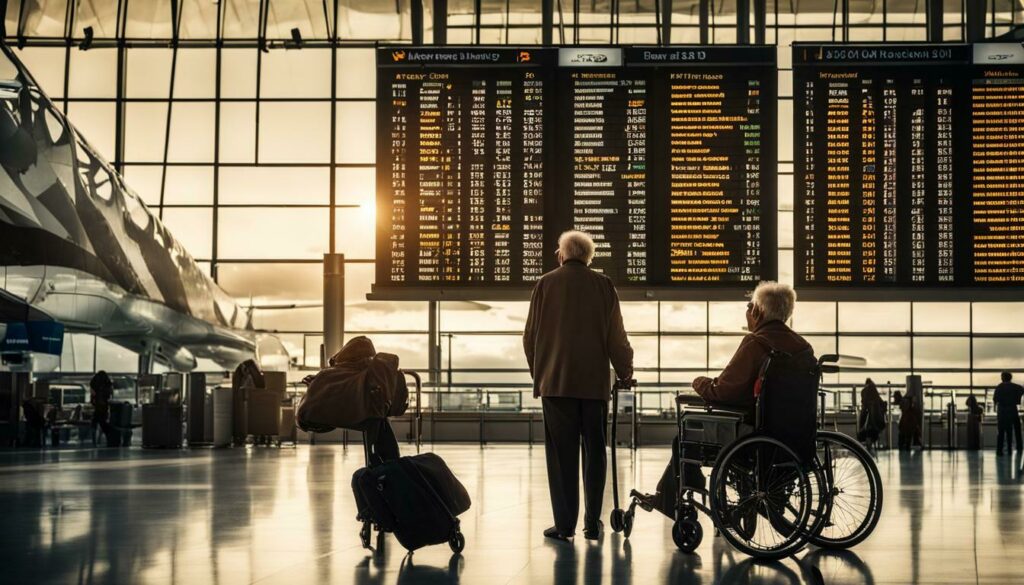
To identify the best accessible travel for seniors in a modern editorial context, one must first dismantle the “Medical Model” of aging, which focuses exclusively on deficits. Instead, we must adopt the “Environmental Model,” which posits that disability and aging are functions of poorly designed environments. Consequently, the “best” options are those that minimize the gap between human capability and environmental demand. A common misunderstanding in the travel industry is that senior accessibility is a binary state, that a cruise ship or a hotel is either “senior-friendly” or it is not. In reality, it is a dynamic spectrum of “Total-Path Continuity.”
The risk of oversimplification in this sector remains high. Many providers use “Senior” as a synonym for “Accessible,” yet the requirements of an 80-year-old traveler with early-stage cognitive shifts are fundamentally different from those of a 65-year-old managing physical mobility challenges. Flagship options are those that provide “Forensic Transparency,” giving travelers specific, measured data points (e.g., precise bed heights, the availability of tactile paving, or decibel levels in public spaces) rather than vague marketing labels.
Furthermore, we must address the “Digital-Physical Dissonance.” A destination can have world-class physical accessibility, but if its booking systems are not screen-reader friendly or its transit apps do not provide real-time information on elevator status, it remains effectively inaccessible. The contemporary standard for a flagship travel asset is “Interoperability,” the seamless handoff between digital information and physical reality. This ensures that the senior traveler’s “Cognitive Load” is spent on the joy of discovery rather than the anxiety of navigation.
Historical Context: From Compliance to Universal Design
The trajectory of senior travel has moved through three distinct philosophical phases. The Era of Exceptions (Pre-1990) viewed older or disabled travelers as outliers. Accommodations were rare and usually required advance “Special Requests.” Travel was a series of barriers to be overcome through individual persistence and often humiliating improvisations. The physical world was treated as a series of immovable obstacles, and the burden of adaptation was placed entirely on the traveler.
The Era of Mandated Compliance (1990–2015), sparked by the Americans with Disabilities Act (ADA) and similar global legislation, forced the industry to adopt minimum standards. While this period saw the proliferation of lifts and ramps, the design was often “Add-on” in nature, functional but frequently sequestered. The accessible entrance was often through a side alley, reinforcing a sense of “Otherness.”
Today, we occupy the Era of Universal Integration (2020s–Present). This era is defined by the principle that “good design for the few is great design for everyone.” Modern infrastructure treats inclusivity as a baseline for the entire visitor economy. We are seeing a “Return to the Vernacular,” where high-tech engineering meets human-centric design, catering to an aging population that demands both luxury and autonomy. In 2026, features like level-boarding trains and sensory-neutral lounges in airports are becoming standard features of top-tier travel infrastructure.
Conceptual Frameworks and Mental Models
To evaluate travel systems with editorial rigor, the following mental models are essential:
1. The “Continuous Chain” Model
This model posits that a travel plan is only as accessible as its most restrictive link. It requires auditing the “Micro-Transitions”: the gap between the curb and the bus, the height of the check-in desk, and the availability of tactile paving at a crosswalk. If one link fails, the entire journey thread is severed.
2. The “Cognitive Budget” Framework
Travel inherently increases cognitive load. For seniors, this load is exacerbated by complex transit hubs and digital-first service models. A “Top Plan” minimizes this load through intuitive signage, AI-driven real-time updates, and consistent layout patterns that reduce the need for constant “Mental Mapping.”
3. The “Redundancy and Recovery” Framework
Mechanical systems fail. Elevators break; ramps malfunction. A sustainable travel plan must have a “Plan B” built into the infrastructure. This includes “Technical Redundancy” (multiple elevators) and “Human Redundancy” (staff trained in manual assistance and adaptive communication).
Key Categories and Variations
The landscape of inclusive travel is diversified by “Operational Intent,” each presenting distinct failure modes and trade-offs.
| Category | Primary Metric | Strategic Trade-off | Regional Advantage |
| All-Inclusive Cruises | Total Autonomy | “Enclave” isolation | Caribbean / Mediterranean |
| Urban Verified Hubs | Transit Density | High sensory noise | Tokyo / Madrid |
| Rail-Integrated Travel | Modal Continuity | Schedule rigidity | Switzerland / Japan |
| Guided Adaptive Tours | Support Ratio | High cost / Low spontaneity | United Kingdom / Scandinavia |
| Low-Sensory Nature | Terrain Grade | Distance from medical | National Parks (USA/Canada) |
| Adaptive Heritage | Historic Fidelity | Ramped access limits | Portugal / Italy |
Decision Logic: The “Verified vs. Self-Reported” Choice
Sophisticated planners now prioritize “Verified” destinations. While many hotels “self-report” accessibility, a high-integrity plan relies on platforms that conduct physical audits. The trade-off is often a smaller selection of properties, but the benefit is the elimination of “Check-in Disaster” risk, the moment a traveler arrives to find the “accessible” room is on the second floor with no lift.
Detailed Real-World Scenarios

Scenario A: The High-Altitude “Thermal Battery” (Switzerland)
-
The System: Utilizing the Swiss Travel System for high-alpine access.
-
The Nuance: The route uses level-entry trains and synchronized bus transfers where the vehicle lowers to the curb.
-
The Failure Mode: “Station Gaps.” If an elevator at a transfer node is out of service, a 5-minute connection becomes a 60-minute detour.
-
Outcome: Real-time data feeds and 24/7 staff support allow for “Dynamic Rerouting,” maintaining the senior’s itinerary without physical strain.
Scenario B: The “Sensory-Managed” Urban Hub (Madrid)
-
The System: Madrid’s “Universal Access” initiative in heritage museums and public plazas.
-
The Nuance: Using haptic floor signals and high-contrast signage to navigate busy plazas.
-
The Risk: “Sensory Exhaustion.” The noise and heat of the city can cause cognitive fatigue even if the physical path is flat.
-
Outcome: The plan incorporates “Cooling and Quiet Zones” every 500 meters, ensuring the traveler can reset their “Cognitive Budget.”
Planning, Cost, and Resource Dynamics
The “Economics of Inclusion” involves a high up-front investment in “Intellectual Capital” and “Verified Data.”
Resource Allocation and Value Metrics (2026 Projections)
| Implementation | Initial Cost Increase | Operational Savings | Reliability Increase |
| Verified Audit Booking | $+15\%$ to $+25\%$ | Zero-failure check-in | High |
| Adaptive Transits | $+50$ per leg | Reduced physical fatigue | Critical |
| Digital Concierge (24/7) | $200 – $500 / trip | Tech-enabled recovery | Essential |
| On-Site Mobility Rental | $100 – $300 / day | Terrain sovereignty | Variable |
The “Opportunity Cost” of Poor Planning: For the senior traveler, the cost of a failed itinerary is not just financial; it is a “Dignity Cost.” A hotel that cannot accommodate specific mobility or sensory needs results in the traveler being functionally “excluded” from their own vacation. Therefore, the higher up-front cost of verified best accessible travel for seniors acts as an insurance policy against systemic failure.
Tools, Strategies, and Support Systems
Deep stewardship requires a technical and intellectual toolkit that extends beyond a simple booking app.
-
LiDAR-Based Room Mapping: Using smartphone sensors to verify clear floor space and turn radii in a hotel room upon arrival.
-
Haptic Navigational Aids: Wearables that use vibration patterns to guide travelers through chaotic terminals without the need for visual focus.
-
On-Demand Medical Logistical Support: Platforms that coordinate the delivery of oxygen, medication, or mobility gear directly to the destination.
-
Digital Twin Previews: Virtual reality walkthroughs that allow travelers to virtually navigate a hotel or station before booking.
-
Smart-Sourcing for Dietary Integrity: Verified databases for cross-contamination and specific nutritional requirements in foreign languages.
-
Crowd-Sourced Real-Time Audits: “Waze-style” reporting for broken lifts or obstructed paths-of-travel.
Risk Landscape: The Taxonomy of Logistical Fragility
In the context of senior travel, risks are rarely isolated; they are “Cascading Events.”
-
Mechanical Cascading: A broken ramp on a bus leads to a missed train, which leads to a canceled hotel reservation.
-
Information Asymmetry: Relying on a “Downloaded Map” that was created before a major street renovation changed the curb geography.
-
The “Invisible” Failure: A hotel claims accessibility but uses scented cleaning products that trigger respiratory issues or lacks visual fire alarms for those with hearing loss.
-
Regulatory “Stranding”: Planning a multi-country route where “Accessibility Standards” change at the border, leading to “Compliance Shocks.”
Governance, Maintenance, and Long-Term Adaptation
Sustainability of access requires a “Maintenance Mindset,” not a “Project Mindset.”
The “Access-Resilience” Checklist
-
Daily: Visual check of all automated door sensors and ramp surfaces.
-
Monthly: “Weight-Test” of all lift systems and motorized furniture.
-
Quarterly: Review of “Digital Accessibility Compliance” for all booking and information portals.
-
Annually: “Lived-Experience Audit” involving a panel of senior travelers to identify new points of friction.
Measurement, Tracking, and Evaluation
-
Leading Indicator: “Navigational Velocity.” Does it take the senior traveler significantly longer to complete a transit task than a younger traveler? A “Top Plan” aims for a 1:1 ratio.
-
Lagging Indicator: “Recovery Time.” After a system failure (like a broken lift), how many minutes pass before the “Plan B” is successfully activated?
-
Qualitative Signal: “Anticipatory Anxiety Score.” Measuring the traveler’s level of stress before the trip begins based on the quality of the provided information.
Common Misconceptions and Ethical Paradoxes
-
Myth: “The newest hotels are always the most accessible.”
Correction: Many new “Boutique” hotels prioritize aesthetic minimalism over functional width, whereas mid-century business hotels often have more standardized, spacious layouts. -
Myth: “Standard travel insurance covers everything.”
Correction: Most policies do not cover the repair of specialized mobility equipment or the cost of a “Medical Repatriation” that requires an adaptive cabin. -
Myth: “Accessibility ruins historic aesthetics.”
Correction: Innovative glass elevators and reversible ramp systems allow for “Zero-Impact” accessibility in heritage sites. -
Myth: “Senior travel is just about physical health.”
Correction: Cognitive ease and sensory management are often more critical for a successful trip than simple physical ramps.
Conclusion
The search for the best accessible travel for seniors is ultimately a search for human dignity. In 2026, the hallmark of a flagship destination is not found in the height of its skyscrapers, but in the “Smoothness of its Transitions.” When we remove the physical and digital barriers to exploration, we aren’t just “accommodating” a segment of the population; we are validating their right to participate in the global exchange of culture and experience. The future of travel is not found in the exclusion of the many, but in the radical, engineering-led inclusion of all.