Neurodivergent Friendly Travel Plans: A Strategic Pillar for Inclusive Mobility
The global travel infrastructure has traditionally been built upon a foundation of standardized sensory inputs and rigid social expectations. From the high-decibel echoes of transit hubs to the unpredictable olfactory landscape of international aviation, the world is often a “hostile” environment for the neurodivergent traveler. However, as we progress through 2026, the industry is witnessing a tectonic shift toward “Cognitive Accessibility.” This evolution moves beyond simple physical accommodations like ramps or elevators to address the invisible, yet significant, barriers presented by sensory processing differences, executive functioning challenges, and the need for environmental predictability.
Designing a journey through a neuro-inclusive lens requires a radical deconstruction of the travel experience. It is not merely about finding “quiet spaces” but about creating a “Predictable Continuity” that spans the entire trip lifecycle. For the individual with Autism, ADHD, dyslexia, or sensory processing disorders, travel is often an exercise in managed dysregulation. The objective is to transition from a model of “survival” to one of “engagement,” where the traveler has the agency to interpret and interact with an unfamiliar world without a debilitating cost to their nervous system.
This article serves as an authoritative examination of the structures and strategies required to build comprehensive travel frameworks for neurodivergent individuals. We will move beyond the superficial “top ten lists” of autism-friendly parks to explore the underlying logistics, economic trade-offs, and risk landscapes of modern navigation. By treating neuro-inclusion as a “Systems Engineering” challenge, we can develop travel assets that are not only inclusive but inherently more resilient and efficient for all travelers.
Understanding “neurodivergent friendly travel plans.”

To effectively identify or implement neurodivergent friendly travel plans, one must first deconstruct the “Standardized Experience” myth. In a traditional travel context, success is often measured by adherence to a schedule and the “enjoyment” of high-stimulation attractions. For the neurodivergent traveler, success is redefined as “Regulation Preservation.” A plan is only as friendly as its weakest point of unpredictability.
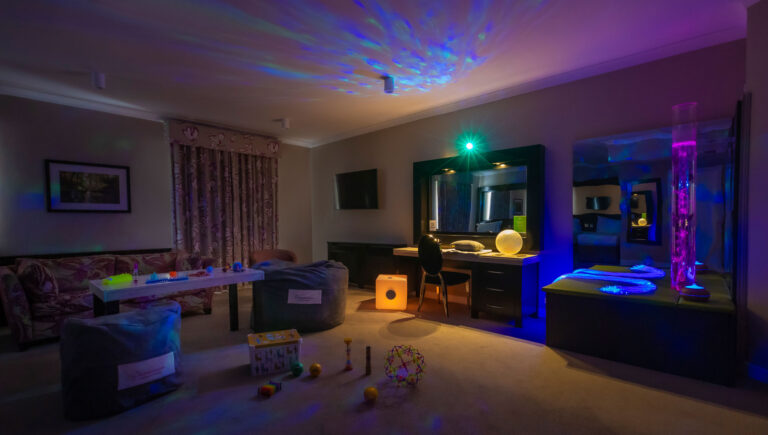
A common misunderstanding in the hospitality sector is the belief that a “quiet room” or a “sensory bag” constitutes a full inclusion strategy. These are localized interventions, not systemic solutions. A high-integrity plan addresses the “Transition Points,” the chaotic space between the car and the terminal, the wait for a delayed flight, or the social complexity of a hotel check-in. The oversimplification risk lies in treating neurodivergence as a monolith; a plan that works for a traveler with high sensory seeking behaviors will be fundamentally incompatible with one who experiences sensory avoidant reactions.
True mastery in this domain requires “Sensory Literacy,” the ability to audit an environment for light flickering frequencies, background hum decibels, and the clarity of directional signage. For a plan to be truly “friendly,” it must offer “Modular Autonomy.” This means providing multiple paths to a destination, allowing the traveler to choose the route with the lowest sensory or social friction based on their real-time internal state.
The Systemic Evolution: From Compliance to Cognitive Equity
The historical trajectory of neuro-inclusive travel has moved from “Specialized Isolation” to “Universal Integration.” For decades, neurodivergent individuals were largely excluded from mainstream travel unless they could mask their needs or were accompanied by a team of caregivers. By 2024, significant shifts in social awareness and legislation, such as the refinement of the “Sunflower Hidden Disabilities” program, began forcing travel providers to acknowledge that 15–20% of the population processes information differently.
In 2026, we are entering the era of “Cognitive Equity.” As the “Neurodiversity Movement” gains professional and economic influence, the demand for sophisticated, solo-capable travel infrastructure has increased. We are seeing “Smart Airports” with real-time sensory heatmaps, hotels that allow for completely digital, non-verbal guest interactions, and transit systems designed with “High-Contrast, Low-Visual-Clutter” wayfinding. Inclusion is no longer a “niche” checkbox; it is a core driver of hospitality innovation.
Conceptual Frameworks for Neuro-Inclusive Navigation
To navigate the world with a neuro-atypical nervous system, travelers and planners should employ specific mental models:
1. The “Sensory Budget” Model
Every neurodivergent individual has a finite amount of “Regulation Energy” per day. Each bright light, loud noise, or social interaction “charges” against this budget. A plan is successful if it ensures the budget is never fully depleted before the traveler reaches their “Safe Zone” (e.g., their hotel room).
2. The “Friction Mapping” Framework
Instead of looking at a destination, we map the “Friction points” of the journey. This includes security queues, boarding processes, and navigating complex menus. Success is found in applying a “Friction Bypass” (e.g., TSA PreCheck or digital mobile ordering) to preserve cognitive energy.
3. The “Scaffolding of Predictability.”
This model requires three layers of information: the “Macro” (the itinerary), the “Micro” (what the hotel lobby looks like), and the “Contingency” (what to do if the train is cancelled). Predictability acts as an external nervous system, reducing the anxiety caused by executive functioning gaps.
Key Categories of Neuro-Inclusive Support
Neurodivergent travelers often require different “Inclusion Profiles” based on their specific needs.
| Category | Primary Benefit | Strategic Trade-off | Best For |
| Sensory-Centric | Noise/light mitigation. | May limit access to “iconic” busy sights. | Sensory avoidant/Autistic. |
| Structure-Heavy | High predictability/schedules. | Low spontaneity; difficult to pivot. | High executive function needs. |
| Social-Lite | Minimal human interaction points. | Loss of “human touch” hospitality. | Social anxiety/Non-verbal. |
| Movement-Friendly | High physical input/flexibility. | Can be seen as “disruptive” in rigid zones. | ADHD/Kinetic seekers. |
| Info-Dense | Pre-arrival video/photo walkthroughs. | Requires high preparation time. | Anxiety/Information seeking. |
Decision Logic: The “Regulation” Pivot
When selecting a destination or transit mode, the traveler must decide between “Environmental Regulation” (relying on the destination to be quiet) and “Personal Regulation” (relying on noise-canceling headphones and gear). For high-stakes travel, a “Dual-Layer” approach is standard.
Real-World Scenarios: Navigating Chaos and Continuity
The “Delayed Departure” Meltdown
-
The Context: A solo traveler with ADHD in an airport during a 4-hour flight delay.
-
The Failure Mode: Relying on the general gate area, which is loud, crowded, and lacks charging for “Regulation Devices.”
-
The Systemic Solution: Use of a “Priority Pass” or sensory room. The plan includes a “Boredom Mitigation Kit” and a pre-scouted quiet gate at the far end of the terminal.
The “Sensory Overload” Recovery
-
The Context: An autistic family at a major theme park.
-
The Nuance: Utilizing a “Disability Access Service” (DAS) to wait in a quiet area instead of a physical queue.
-
The Outcome: By bypassing the sensory-heavy queue, the family preserves enough “Sensory Budget” to enjoy the actual attraction and have a successful dinner afterward.
Planning, Cost, and Resource Dynamics
Neurodivergent travel often carries a “Cognitive Tax.” While an able-bodied, neurotypical traveler might save money by taking a budget bus or a shared hostel, the neurodivergent traveler often pays more for privacy, speed, and environmental control.
Estimated Resource Allocation (Solo vs. Supported)
| Cost Center | Standard Travel | Neuro-Inclusive Travel | The “Inclusion Premium” |
| Accommodation | $150/night (Standard) | $250/night (Soundproof/Suite) | Space for decompression. |
| Transportation | $20/day (Public) | $80/day (Private/Direct) | Avoiding sensory-heavy crowds. |
| Preparation | 2 Hours | 20+ Hours (Walkthroughs/Research) | The “Preparation Workload.” |
| Insurance | $60 | $150 (Includes “Anxiety/Medical” pivots) | Higher risk of trip interruption. |
The “Opportunity Cost” of Spontaneity: For a neuro-inclusive plan, the cost of spontaneity is often too high. Every “unplanned” event is a potential point of dysregulation. Therefore, the “Top” plans reinvest spontaneity into “Planned Options”—giving the traveler a choice between three pre-vetted activities rather than an open-ended “let’s see what happens.”
The Technology Stack: Tools for Sensory Sovereignty
-
Haptic Wayfinding: Wearable devices that use gentle vibrations to signal turns, reducing the need to look at a high-stimulation phone screen.
-
Sensory Heatmapping: Apps that show real-time noise and light levels in public spaces, allowing travelers to navigate “quiet corridors.”
-
Digital “First-Person” Walkthroughs: VR or 360-video tours of airports and hotels that allow the traveler to “acclimatize” before physical arrival.
-
AI-Driven Social Scripts: Tools that provide non-verbal communication cards or pre-written interaction scripts for checking in or ordering food.
-
Noise-Neural Earbuds: Devices that use AI to selectively block “aggressive” sounds (crying babies, jet engines) while allowing “clear” speech to pass through.
Risk Landscape: The Taxonomy of Neurological Overload
1. The “Sensory Cascade” Failure
When one sensory input (a loud noise) leads to a loss of executive function (forgetting a passport), which leads to a social conflict (anxiety with an officer). A “Resilient Plan” identifies these cascades early and provides “Emergency Ejection” points (e.g., leaving the queue immediately to reset).
2. “Digital Gatekeeping” Risk
If a hotel or airline forces all interactions through a poorly designed, high-stimulation app, the neurodivergent traveler may find themselves “locked out” of the service due to cognitive overwhelm.
3. The “Invisibility Trap.”
Because neurodivergence is often invisible, staff may not provide the necessary accommodations unless “Self-Advocacy” is high. The risk is a denial of service or a social misunderstanding that escalates into a security issue.
Governance, Maintenance, and Long-Term Adaptation
A neuro-inclusive travel plan is a “living document.” It must be updated based on “Sensory Data” from previous trips.
The “Regulation Governance” Checklist
-
Pre-Trip: Verify “Safe Food” availability and download offline maps.
-
Daily Audit: Review “Energy Levels” every 4 hours. If “Budget” is low, cancel the evening activity.
-
Post-Trip: Document “Sensory Triggers” and “Successful Bypasses” to refine the next journey.
-
Adaptation Trigger: If a traveler experiences a “shutdown” or “meltdown,” the plan immediately pivots to “Recovery Mode” for 24 hours.
Measurement: Evaluating the Success of an Inclusive Journey
How do we measure the efficacy of neurodivergent friendly travel plans?
-
Leading Indicator: “Logistical Calm.” The percentage of transitions (car to plane, plane to hotel) that occurred without a “Crisis Intervention.”
-
Lagging Indicator: “Recovery Time.” How many days did it take the traveler to feel “normal” after returning home? A successful trip has a low “Post-Trip Exhaustion” score.
-
Qualitative Signal: “Agency Score.” Did the traveler feel they made choices, or did they feel “pushed” through the system?
Common Misconceptions and Ethical Considerations
-
Myth: “Neuro-friendly just means quiet.”
Correction: For some (e.g., ADHD seekers), a quiet room is under-stimulating and causes “Restless Anxiety.” Inclusion means “Sensory Matching.” -
Myth: “You can’t travel solo with Autism.”
Correction: Many Autistic individuals thrive in solo travel because they have total control over their environment and schedule. -
Myth: “Luxury Barrier”
Correction: Accessibility is currently a luxury good. Low-income neurodivergent individuals are often forced into the most sensory-hostile environments (budget transit, crowded housing). True inclusion requires moving these features into public, low-cost infrastructure.
Conclusion
The journey toward neurodivergent friendly travel plans is a trajectory toward a more humane and intelligent travel industry. By designing for the “edges” of human neurobiology, we create systems that are more intuitive, predictable, and resilient for everyone. As we look toward the future, the goal is not to “fix” the neurodivergent traveler to fit the world, but to “engineer” the world to be worthy of the diversity of the human mind. The ultimate metric of success is a world where “Home” is not the only place where a neurodivergent person feels safe to exist.