Handicap Friendly Stay Plans: The Definitive Guide to Inclusive Exploration
The global hospitality sector is currently navigating a period of profound structural reassessment. For much of the twentieth century, the “hotel” was an exercise in standardization, built for a narrow demographic profile that prioritized the mobile, neurotypical, and sensory-unimpaired traveler. However, as we move through 2026, the paradigm has shifted toward “Universal Integration.” This transition recognizes that a lodging environment is not merely a place of rest, but a critical node in a traveler’s metabolic “Chain of Movement.” When this node fails to be inclusive, the entire journey thread is severed, leading to a collapse of autonomy and dignity.
This evolution from “standardized” to “adaptive” is more than a response to legal mandates like the ADA or the European Accessibility Act. It is a recognition of demographic reality: an aging global population and a sophisticated market that demands sovereignty over its environment. To deeply analyze this space, we must move past the “Checkbox Mentality” where the presence of a single ramp defines accessibility and move toward a model of “Total-Path Continuity.” In this framework, the success of a lodging plan is measured by the lack of friction encountered from the initial digital booking to the physical navigation of the suite and the cultural competency of the support staff.
As the industry matures, the distinction between “luxury” and “accessibility” is dissolving. The most high-performing properties in the modern era are those that have integrated adaptive technologies so deeply that they become invisible “silent” features. This article serves as the definitive reference for those seeking to understand the deep-seated logic, logistical nuance, and technical standards required to evaluate and execute high-integrity habitation assets in a complex global market.
Understanding “handicap friendly stay plans.”
To identify truly effective handicap friendly stay plans in a modern editorial context, one must first dismantle the “Medical Model” of disability, which focuses exclusively on individual limitations. Instead, we must adopt the “Environmental Model,” which posits that disability is a function of a poorly designed environment. Consequently, the “best” plans are those that minimize the gap between human capability and environmental demand through intrinsic design. A common misunderstanding in the travel industry is that accessibility is a static, binary state. In reality, it is a dynamic spectrum of “Interoperability.”
The risk of oversimplification in this sector is high. Many platforms use “ADA-compliant” or “Level-access” as catch-all terms, yet these labels often fail to account for the nuance of “Micro-Friction.” For example, a hotel room may have a roll-in shower, but if the bed height is incompatible with a standard hoist or the carpet pile is too deep for a manual wheelchair, the room is effectively non-functional. High-integrity handicap friendly stay plans are those that provide “Forensic Transparency,” giving travelers specific, measured data points, such as precise door widths, counter heights, and decibel levels for quiet zones, rather than vague certifications.
Furthermore, we must address the “Digital-Physical Dissonance.” A destination can have world-class physical accessibility, but if its booking systems are not screen-reader friendly or its transit apps do not provide real-time elevator status, it remains inaccessible. The contemporary standard for a flagship travel asset is “Total-Path Continuity,” the seamless handoff between digital information and physical reality. This ensures that the traveler’s cognitive load is spent on the experience of the journey rather than the logistics of survival.
Historical Context: From Segregation to Universal Design
The trajectory of adaptive lodging has moved through three distinct philosophical phases. The Era of Exceptions (Pre-1990) viewed disabled travelers as outliers. Accommodations were rare and usually required advance “Special Requests.” Travel was a series of barriers to be overcome through individual persistence and often humiliating improvisations. The physical world was treated as a series of immovable obstacles, and the burden of adaptation was placed entirely on the traveler.
The Era of Mandated Compliance (1990–2015), sparked by the Americans with Disabilities Act (ADA) and similar global legislation, forced the industry to adopt minimum standards. While this period saw the proliferation of lifts and ramps, the design was often “Add-on” in nature, functional but frequently sequestered. The accessible entrance was often through a side alley, reinforcing a sense of “Otherness.”
Today, we occupy the Era of Universal Integration (2020s–Present). This era is defined by the principle that “good design for the few is great design for everyone.” Modern transit hubs and lodging, like the “Smart Hubs” of East Asia or the adaptive heritage sites of Southern Europe, utilize “Silent Accessibility.” These are features like level-boarding trains, height-adjustable kiosks, and sensory-neutral lounges that benefit aging populations and families with strollers as much as they do travelers with specific disabilities.
Conceptual Frameworks and Mental Models
To analyze lodging systems with editorial rigor, the following mental models are essential:
1. The “Continuous Chain” Model
This model posits that a stay is only as inclusive as its most restrictive link. It requires an audit of the “Micro-Transitions”: the gap between the curb and the bus, the height of the check-in desk, and the availability of tactile paving. If one link fails, the entire journey thread is severed.
2. The “Cognitive Load” Framework
Travel inherently increases mental demand. For travelers with sensory or neurodivergent needs, this load is significantly higher. This framework evaluates how much “Mental Mapping” a guest must perform to navigate a property. A high-integrity plan minimizes this load through intuitive signage, predictable layouts, and digital previews.
3. The “Redundancy and Recovery” Framework
Mechanical systems fail. Elevators break; voice-activation software glitches. A sustainable stay plan must have a “Plan B” built into the infrastructure. This includes technical redundancy (multiple elevators) and human redundancy (staff trained in manual assistance and adaptive communication).
Key Categories and Variations
The landscape of adaptive lodging is diversified by “Operational Intent,” each presenting distinct failure modes and trade-offs.
| Category | Primary Metric | Strategic Trade-off | Ideal Context |
| Integrated Urban Hubs | Transit Connectivity | High sensory noise | Business/Urban Exploration |
| Smart Cruise Corridors | On-site Autonomy | “Enclave” isolation | Multi-generational Family |
| Adaptive Heritage | Historic Fidelity | Structural limits | Cultural/Leisure |
| Guided Adaptive Tours | Support Ratio | High cost / Low spontaneity | Complex Mobility Needs |
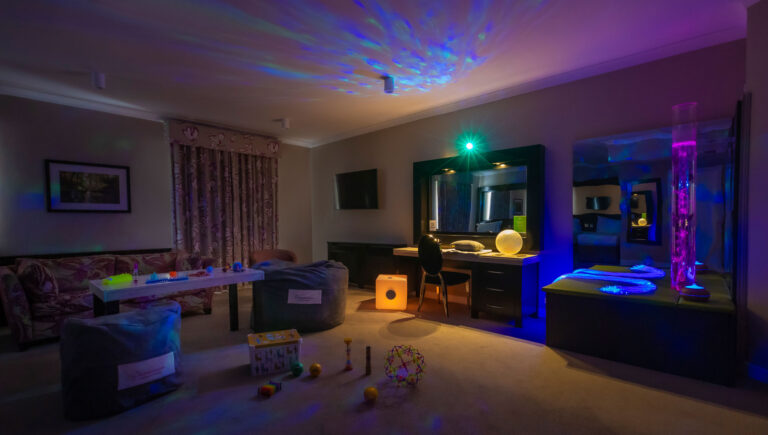
| Neuro-Inclusive Retreats | Environmental Control | Geographical isolation | Sensory Processing Needs |
Decision Logic: The “Verified vs. Self-Reported” Choice
Sophisticated planners now prioritize “Verified” properties. While many hotels self-report accessibility, a high-integrity plan relies on third-party audits. The trade-off is often a smaller selection of properties, but the benefit is the elimination of “Check-in Disaster” risk—the moment a traveler arrives to find the accessible room is on the second floor with no lift.
Detailed Real-World Scenarios
The Urban “High-Velocity” Stay
-
The Plan: A 4-day business trip to Tokyo, utilizing a “Smart Hub” hotel integrated with the rail system.
-
The Nuance: The room features ceiling-track hoists and voice-controlled lighting.
-
The Failure Mode: “Software Stranding.” A firmware update to the building’s smart system renders the voice controls unresponsive for a guest with limited manual dexterity.
-
Outcome: A high-integrity plan includes “Analog Redundancy” manual override switches placed at a reachable height (36 inches).
The “Sensory-Managed” Stay (Dubai/Singapore)
-
The Plan: A long-haul transit through a major international hub.
-
The Nuance: Using “Quiet Lounges” and Sunflower Lanyards (signifying hidden disabilities).
-
The Risk: Sensory overload in high-gloss, echoing terminals.
-
Outcome: The plan schedules an extra 3-hour buffer to allow for “sensory reset” between flights in a low-stimulus environment.
Planning, Cost, and Resource Dynamics
The “Economics of Inclusion” involves a shift from “Initial Purchase” to “Total Utility.”
Resource Intensity and Value Metrics (2026 Projections)
| Implementation | Initial Cost Increase | Operational Value | Reliability Factor |
| Verified Audit Booking | $+15\%$ to $+25\%$ | Zero-failure check-in | High |
| Private Adaptive Transfers | $+50$ to $+100$ per leg | Reduced physical fatigue | Critical |
| 24/7 Digital Concierge | $200 – $500 / trip | Tech-enabled recovery | Essential |
| On-Site Mobility Rental | $100 – $300 / day | Terrain sovereignty | Variable |
The “Opportunity Cost” of Poor Planning: For the adaptive traveler, the cost of a failed itinerary is not just financial; it is a “Dignity Cost.” A hotel that cannot accommodate a specific mobility or sensory need results in the traveler being functionally “excluded” from their own vacation. High-integrity planning acts as an insurance policy against systemic failure.
Tools, Strategies, and Support Systems
Deep stewardship requires a technical and intellectual toolkit that extends beyond a simple booking app.
-
LiDAR-Based Room Mapping: Using smartphone sensors to verify clear floor space and turn radii in a hotel room upon arrival.
-
Haptic Navigational Aids: Wearables that use vibration patterns to guide travelers through chaotic terminals without the need for visual focus.
-
AI-Sign Language Interpreters: Real-time, high-fidelity digital avatars that translate gate announcements into sign language on personal devices.
-
Digital “Twin” Previews: Virtual reality walkthroughs that allow travelers to virtually navigate a hotel or station before booking.
-
Smart-Sourcing for Medical Supply: Platforms that coordinate the delivery of heavy consumables (oxygen, supplies) directly to the destination.
-
Crowd-Sourced Real-Time Audits: Reporting for broken lifts or obstructed paths-of-travel to improve the “Continuous Chain” for others.
Risk Landscape: The Taxonomy of Logistical Fragility
In the context of adaptive travel, risks are rarely isolated; they are “Cascading Events.”
-
Mechanical Cascading: A broken ramp on a bus leads to a missed train, which leads to a canceled hotel reservation.
-
Information Asymmetry: Relying on a downloaded map created before a major street renovation changed the curb geography.
-
The “Invisible” Failure: A hotel claims accessibility but uses scented cleaning products that trigger respiratory issues or lacks visual fire alarms for those with hearing loss.
-
Regulatory “Stranding”: Planning a multi-country route where “Accessibility Standards” change at the border, leading to “Compliance Shocks.”
Governance, Maintenance, and Long-Term Adaptation
Sustainability of access requires a “Maintenance Mindset,” not a “Project Mindset.”
The Stewardship Audit Checklist
-
Daily: Testing of all automated door sensors and hearing loop systems.
-
Weekly: Level-check of elevators (ensuring they stop flush with the floor) and clear-path inspections.
-
Quarterly: Sensitivity and adaptive-equipment training for all front-line staff.
-
Annual: Physical re-verification of “Room-Scale” metrics to ensure furniture hasn’t been moved in a way that blocks wheelchair paths.
Measurement, Tracking, and Evaluation
-
Leading Indicator: “Navigational Velocity.” Does it take the adaptive traveler significantly longer to complete a transit task than a non-disabled traveler? A top-tier plan aims for a 1:1 ratio.
-
Lagging Indicator: “Recovery Time.” After a system failure (like a broken lift), how many minutes pass before the “Plan B” is successfully activated?
-
Qualitative Signal: “Anticipatory Anxiety Score.” Measuring the traveler’s level of stress before the trip begins based on the quality of the provided information.
Common Misconceptions and Ethical Paradoxes
-
Myth: “The newest hotels are always the most accessible.”
Correction: Many new “Boutique” hotels prioritize aesthetic minimalism over functional width, whereas mid-century business hotels often have more standardized layouts. -
Myth: “Standard travel insurance covers everything.”
Correction: Most policies do not cover the repair of specialized mobility equipment or the cost of a medical repatriation that requires an adaptive cabin. -
Myth: “Accessibility ruins historic aesthetics.”
Correction: Innovative glass elevators and reversible ramp systems allow for “Zero-Impact” accessibility in heritage sites. -
Myth: “Standard ADA rooms are enough.”
Correction: A “Top Plan” recognizes that “One-Size-Fits-All” fails; travelers need specific data on bed height, toilet placement, and visual alarms.
Conclusion
The search for high-integrity adaptive lodging is ultimately a pursuit of human dignity. When we remove the physical and digital barriers to rest and sanctuary, we aren’t just “accommodating” a segment of the population; we are validating their right to participate in the global exchange of culture and leisure. In 2026, the hallmark of an elite lodging option is not found in its exclusivity, but in its “Smoothness of Transitions.” By integrating advanced engineering with empathetic service, the industry can move toward a future where “lodging” is a universal human right, not a logistical privilege.