Top Assisted Living Travel Options: The Definitive Guide to Kinetic Care
The global hospitality landscape is currently undergoing a silent but profound structural transformation. For much of the twentieth century, travel was framed as a binary experience: one was either fully mobile and independent or confined to a domestic care environment. However, as we progress through 2026, the demographic reality of an aging, affluent, and technologically literate global population has shattered this dichotomy. The “Assisted Living” category is no longer a static destination; it has become a mobile service layer that can be integrated into the global transit fabric.
This evolution from “stationary care” to “kinetic support” represents more than a response to consumer demand. It is a recognition that the “Chain of Movement,” the sequence of transitions from home to terminal, vessel, and destination,n is often the point of failure for those with moderate care needs. When this chain breaks, the result is not just a logistical inconvenience but a collapse of dignity and safety. To deeply analyze this space, we must move beyond the “Senior Tour” stereotypes and examine the systemic integration of medical oversight, universal design, and luxury hospitality.
The distinction between “accessible travel” and “assisted travel” is critical. While the former focuses on the physical environment, such as ramps, wider doors, and elevators, the latter prioritizes the human and clinical infrastructure. High-performing top assisted living travel options are those that treat care as an invisible, high-integrity “background process,” allowing the traveler to engage with the world without the exhausting burden of managing their own logistical and medical survival. This article serves as the definitive reference for understanding the deep-seated logic and technical standards required to evaluate and execute high-integrity mobility plans for seniors in a complex global market.
Understanding “top assisted living travel options.”
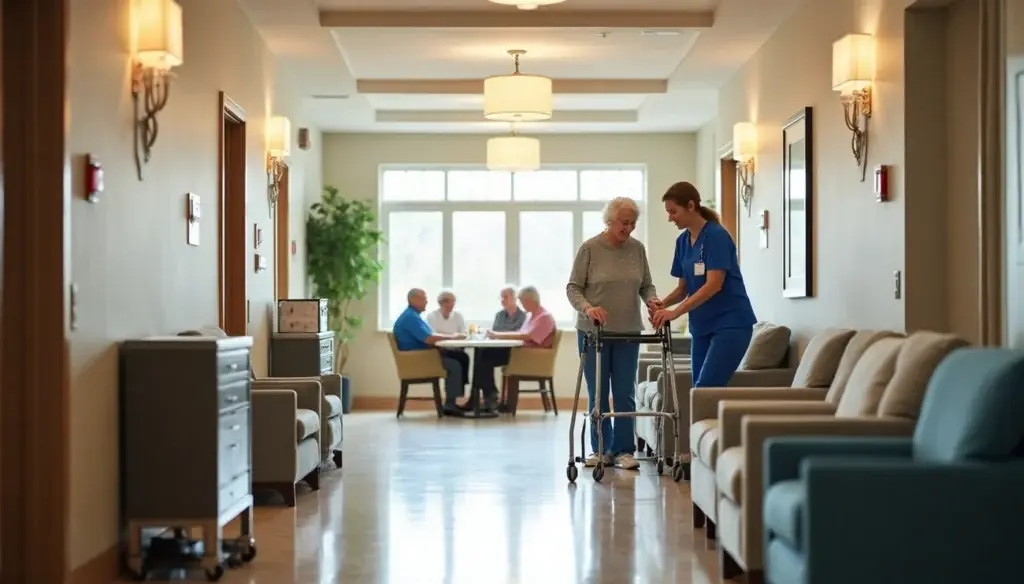
To identify the top assisted living travel options in a modern editorial context, one must first dismantle the “Medical Model” of aging. This outdated perspective focuses exclusively on deficits and limitations. A contemporary, high-integrity analysis adopts the “Functional Model,” which posits that disability or limitation is a function of a poorly designed environment or a lack of specific support layers. Consequently, the “best” options are those that minimize the gap between a senior’s capability and the environment’s demands through intrinsic design and proactive staffing.
A common misunderstanding in the travel sector is the conflation of “Companion Care” with “Clinical Support.” A family member or a generic travel companion may provide emotional support, but they lack the training to manage “Transition Stress,” the physiological and cognitive strain that occurs during airport security, customs, or changing time zones. High-integrity top assisted living travel options provide “Forensic Transparency.” This means providing travelers with specific data: the ratio of medically trained staff on a vessel, the exact distance between a suite and a medical station, and the specific protocols for medication refrigeration during multi-modal transit.
The risk of oversimplification often centers on “Destination Bias.” Families often focus on whether the hotel is nice, rather than whether the “Transit Thread” is secure. A flagship assisted living plan provides “Total-Path Continuity.” It ensures that the care level remains consistent across different jurisdictions and modes of transport. Without this continuity, a luxury cruise can quickly turn into a medical crisis if the shore excursions lack the same level of support as the ship. A high-integrity plan is a “Sovereign Ecosystem” that moves with the traveler, rather than a series of disconnected services.
Historical Context: From Sanatoriums to Sovereign Motion
The trajectory of assisted travel has moved through three distinct philosophical phases. The Era of Confinement (Pre-1980) viewed individuals with significant care needs as non-travelers. “Vacations” were limited to specialized sanatoriums or convalescent homes. Travel was a series of barriers to be avoided rather than a right to be exercised.
The Era of Specialized Charters (1980–2015) saw the rise of “Senior-Only” tours. While these lowered the barrier to entry, they often relied on “Segregated Access.” Seniors were moved in large groups through pre-vetted, highly sanitized routes that offered little in the way of authentic cultural immersion. This period focused on “Safety through Isolation. If you stay in the group, you stay safe.
Today, we occupy the Era of Integrated Sovereignty (2020s–Present). This era is defined by “Universal Integration.” High-performing properties and carriers now utilize “Silent Assistance.” This includes features like level-boarding trains, AI-driven mobility aids, and “Shadow Nursing” where a medical professional travels in a discreet capacity, allowing the traveler to maintain a sense of independence and social standing. In this phase, the goal is “Environmental Predictability.” Seniors can pre-habituate to a space via “Digital Twins” or virtual tours, ensuring that the actual physical experience contains zero “Cognitive Shocks.”
Conceptual Frameworks and Mental Models
To evaluate habitation and transit systems for seniors with editorial rigor, the following mental models are essential:
1. The “Metabolic Load” Model
Travel inherently increases physiological and cognitive demand. This framework evaluates a plan based on how much “Metabolic Currency” a senior must spend to navigate a day. A high-performing plan “returns” this currency by providing seamless transfers, noise-neutral environments, and early-boarding protocols. The goal is to keep the traveler’s heart rate and cortisol levels within a “Restorative Range” rather than a “Survival Range.”
2. The “Cognitive Budget” Framework
Dementia and age-related cognitive decline make “Newness” a potential stressor. This framework assesses how much “Mental Mapping” a guest must perform. A high-integrity plan uses “Predictable Architecture” layouts that remain consistent across different hotels or ships—and digital previews that allow for “Pre-Habituation.” The more a senior feels they “know” a place before they arrive, the lower the cognitive cost of staying there.
3. The “Redundancy and Recovery” Framework
Mechanical and human systems fail. Elevators break; flight attendants misunderstand care instructions. This framework evaluates a destination’s “Recovery Resilience.” Does the staff have a “Plan B” that maintains the senior’s dignity? This involves training beyond basic compliance, focusing on “Empathetic Problem Solving” when hardware fails.
Key Categories and Strategic Trade-offs
The landscape of 2026 assisted travel is segmented by “Operational Intent.”
| Category | Primary Metric | Strategic Trade-off | 2026 Leading Example |
| All-Inclusive Medical Cruises | Clinical Staff Ratio | Limited local immersion | Specialized Antarctic Expedition Ships |
| Shadow-Nurse Concierge | Individual Autonomy | Extremely high cost | European “Grand Tour” Private Rail |
| Integrated Senior Hubs | Proximity to Acute Care | Urban sensory noise | Singapore “Age-Forward” Hospitality Zones |
| Adaptive Adventure Resorts | Physical Stimulus | High planning lead-time | Swiss Alps “Silver” Trekking Basecamps |
| Neuro-Inclusive Retreats | Environmental Control | Geographical isolation | Coastal Maine “Slow Travel” Enclaves |
Decision Logic: The “Clinical vs. Social” Choice
When selecting among the top assisted living travel options, planners must decide where to place the “Care Weight.” A “Clinical-First” approach is necessary for those with complex medication or mobility needs, but it can feel institutional. A “Social-First” approach utilizes high-end hospitality staff trained in senior care, which feels more like a standard vacation but carries a higher risk if a medical crisis occurs. High-integrity plans attempt to blend these, using “Invisible Medics” who are part of the hospitality team.
Detailed Real-World Scenarios
The Multi-Modal Urban Transition
-
The Context: A traveler with Parkinson’s disease navigating a 12-hour journey involving two flights and a rail transfer.
-
The System: Use of a “Mobile Care Liaison” who manages all baggage and medication timing.
-
The Failure Mode: “Infrastructural Desynchronization.” An elevator outage at a train station requires a 400-yard detour.
-
Outcome: A high-integrity plan includes “Surface Redundancy” pre-booked private ground transport that can bypass station-level outages.
Scenario B: The “Sensory-Managed” Cruise
-
The Context: A senior with early-stage Alzheimer’s on a 14-day Mediterranean cruise.
-
The System: Use of “RFID Wayfinding,” a wearable that vibrates or provides audio cues if the traveler moves toward a confusing or high-traffic area.
-
The Nuance: The suite features “Circadian Lighting” that automatically shifts to prevent “Sundowning” (late-day confusion).
-
Outcome: The traveler maintains a sense of autonomy because the environment “guides” them silently, reducing the need for constant verbal correction from family.
Planning, Cost, and Resource Dynamics
The “Economics of Kinetic Care” involves a shift from “Travel Costs” to “Risk Mitigation Premiums.”
Resource Intensity and Value Metrics (2026 Projections)
| Implementation Layer | Daily Cost Increase | Operational Value | Reliability Factor |
| Shadow Nursing (RN) | $800 – $1,500 | Emergency medical sovereignty | Critical |
| Private Air-to-Suite Transfer | $400 – $800 | Elimination of “Transition Stress” | High |
| Neuro-Adaptive Suites | $+30\%$ room rate | Prevention of cognitive meltdowns | Essential |
| Specialized Meal Prep | $100 – $200 | Management of dysphagia/nutrition | Variable |
The “Opportunity Cost” of Poor Planning: For the assisted traveler, the cost of a failed itinerary is not just financial; it is a “Health Cost.” A single fall in a non-accessible bathroom or an ignored medication window can end a senior’s traveling years forever. High-integrity planning acts as a “Long-Term Mobility Insurance,” preserving the senior’s ability to travel in the future by preventing a catastrophic event today.
Tools, Strategies, and Support Systems
A premier assisted living plan is defined by its “Integrated Support Stack.”
-
LiDAR Room Audits: Before a traveler arrives, a liaison uses smartphone sensors to “scan” the room, verifying that turn radii for walkers and bed-to-floor heights match the traveler’s specific ergonomic needs.
-
Haptic Wayfinding Wearables: Devices that use gentle vibration patterns to guide seniors through terminals, reducing the need for them to constantly look up at confusing signage.
-
AI-Medication Dispensers: Portable, cloud-linked devices that ensure dosage accuracy even when moving across multiple time zones.
-
Satellite-Linked Health Monitoring: Real-time biometrics (O2, heart rate, hydration) monitored by a remote clinical team who can alert the on-site liaison before a crisis occurs.
-
Smart-Sourcing for Oxygen: A global network that ensures oxygen concentrators are delivered to every node of the journey, eliminating the need for the traveler to transport heavy equipment.
-
Pre-Habituation Virtual Reality: Allowing seniors to “walk through” their hotel or cruise ship from their living room weeks before the trip, building “Visual Memory” of the space.
Risk Landscape: The Taxonomy of Logistical Fragility
Assisted travel faces “Compounding Risks” where a small error in one area triggers a massive failure in another.
-
The “Cognitive Cascade”: A flight delay leads to sleep deprivation, which triggers a spike in confusion (delirium), rendering the senior unable to follow safety instructions during the rest of the journey.
-
Jurisdictional Medication Gaps: Carrying specific controlled medications across borders where they may be illegal or require complex paperwork that is missing.
-
Thermal Regulation Failure: Older bodies have less efficient “Thermostatic Control.” A broken HVAC system in a tropical destination can lead to rapid dehydration and kidney stress.
-
The “Support Fatigue” Risk: Relying on a family member for 24/7 care during a trip, leading to “Caregiver Burnout” and a subsequent lapse in supervision or medication management.
Governance, Maintenance, and Long-Term Adaptation
Kinetic care requires a “Continuous Audit” mindset rather than a “Set and Forget” strategy.
The “Sovereignty” Maintenance Checklist
-
Daily: Verification of all wearable battery levels and medication supply checks.
-
Weekly: Review of local hospital proximity and “Acute-Care Escape Routes” for the current destination.
-
Quarterly: Assessment of the senior’s “Functional Baseline”—has their mobility or cognitive status changed enough to require an upgrade in the support layer?
-
Post-Trip: A “Failure Audit” that documents every moment of friction, used to refine the next itinerary.
Measurement, Tracking, and Evaluation
-
Leading Indicator: “Navigational Parity.” Does it take the assisted traveler significantly longer to complete a transit task (like boarding) than a non-assisted traveler? A top-tier plan seeks to close this gap.
-
Lagging Indicator: “Recovery Time.” After the trip, how many days does it take for the senior’s biometrics and cognitive clarity to return to their “Home Baseline”? If it takes weeks, the trip’s “Metabolic Load” was too high.
-
Qualitative Signal: “Social Integration Score.” Did the traveler feel like a guest, or did they feel like a patient? The goal of top assisted living travel options is to maximize the guest experience while silently managing the patient’s needs.
Common Misconceptions and Ethical Paradoxes
-
Myth: “Standard ADA rooms are enough for assisted living.”
Correction: ADA rooms focus on physics (space); assisted living requires chemistry (medication management) and psychology (cognitive support). -
Myth: “Cruise ships are floating hospitals.”
Correction: Most cruise ships are equipped for stabilizing trauma, not managing chronic, complex geriatric conditions. Specialized “Medical Cruises” are a separate, higher-integrity category. -
Myth: “Travel insurance covers all care needs.”
Correction: Most policies only cover “Unforeseen Emergencies,” not the routine assistance needed for a senior with a pre-existing condition. -
Myth: “Technology replaces the need for humans.”
Correction: Tech like AI wayfinding is a force multiplier for a human caregiver; it cannot replace the “Clinical Intuition” of a trained nurse.
Conclusion
The pursuit of the top assisted living travel options is ultimately a pursuit of environmental and social sovereignty. When we build transit systems that accommodate the physiological and cognitive realities of aging, we are not just “helping the elderly”; we are providing our global infrastructure for the future. In 2026, the hallmark of an elite destination is its “Silent Integration,” the ability to provide a high-fidelity cultural experience while invisibly maintaining the health and dignity of the traveler. The future of travel is not found in the exclusion of the frail, but in the engineering-led inclusion of all.