Best Accessible Travel for Solo Travelers: A Strategic Authority Guide
The modern travel landscape is undergoing a radical shift from “standardized accessibility” to “individualized autonomy.” In the mid-2020s, this evolution is most visible in the surge of independent exploration. Travel is no longer merely about reaching a destination; it is an act of asserting agency over one’s environment. For the solo traveler with a disability, the stakes are uniquely high. The margin for error, whether a failed elevator, a non-responsive transit app, or an improperly weighted ramp, is thinner when traveling alone.
However, the “best accessible travel for solo travelers” is not defined by the absence of barriers, but by the presence of resilient systems. This involves a shift in perspective from the “Medical Model” of disability, which focuses on limitations, to the “Social Model,” which identifies and remediates systemic obstacles. By 2026, we see the emergence of “Kinetic Equity,” in which universal design in digital and physical infrastructure enables solo travelers to navigate unfamiliar cities with the same fluidity as their able-bodied counterparts.
This article serves as an authoritative pillar for those seeking to master the complexities of solo accessible exploration. We will move beyond the superficial “top ten lists” to examine the underlying frameworks of travel logistics, the economics of solo independence, and the risk-mitigation strategies required to turn a daunting itinerary into a repeatable success.
Understanding “best accessible travel for solo travelers.”
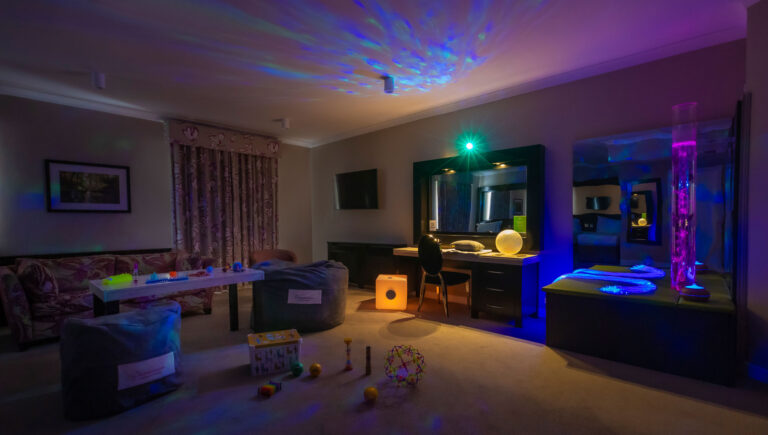
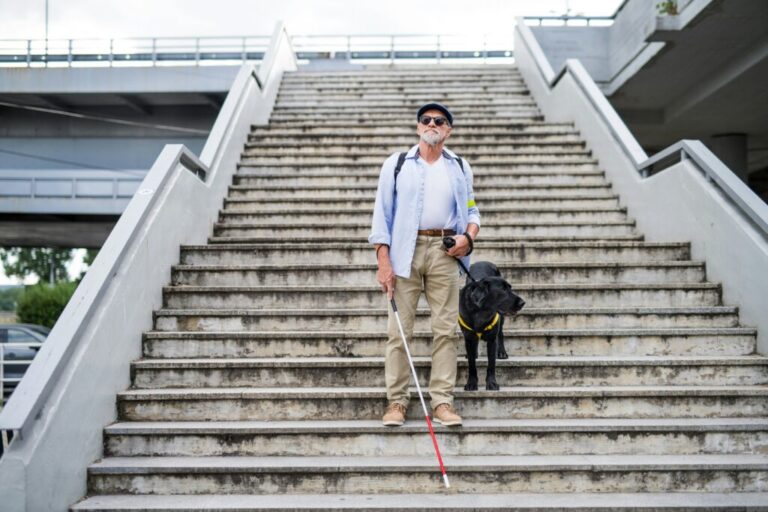
The phrase “best accessible travel for solo travelers” is often misinterpreted as a search for the most “wheelchair-friendly” city. In reality, accessibility is a multi-dimensional spectrum that includes sensory, cognitive, and neurodivergent needs. A city with perfect sidewalk cutouts but no haptic navigation cues may be inaccessible to a blind solo traveler. Similarly, a high-stimulation metropolitan hub might provide excellent physical access while presenting insurmountable barriers for a solo traveler with sensory processing sensitivities.
A common misunderstanding is the “Standardized User” myth, the assumption that if a hotel room meets ADA or local building codes, it is “accessible.” For a solo traveler, the operational accessibility of that room, the height of the light switches from a seated position, the weight of the entry door, or the reliability of the automated check-in kiosk becomes a critical factor for independence. If a traveler cannot enter their room without assistance, the “solo” nature of the trip is compromised.
Oversimplification risks often lead travelers to rely on “crowdsourced” accessibility data, which can be subjective and outdated. True mastery in this domain requires “Topographical Literacy,” the ability to interpret architectural data, transit schedules, and digital accessibility audits to predict how an environment will respond to one’s specific needs.
The Systemic Evolution: From Compliance to Kinetic Equity
The historical trajectory of accessible travel has moved from “Specialized Segregation” to “Universal Integration.” For decades, travelers with disabilities were funneled into group tours or clinical “transportation services.” By 2024, significant legislative shifts, such as the finalized WCAG 2.1 Level AA digital standards, began forcing travel providers to treat accessibility not as a charity, but as a core service requirement.
In 2026, we are witnessing the rise of the “Inclusive Economy.” As Millennials and Gen Z—who view travel as a “non-negotiable” expense age and experience disability, the demand for high-end, solo-capable infrastructure has skyrocketed. This shift is supported by “Smart City” initiatives where real-time elevator status, bus-ramp functionality, and curb-cut gradients are integrated into standard mapping APIs. We are no longer designing for a “niche”; we are designing for a world where mobility is a fluid, technology-enhanced human right.
Conceptual Frameworks for Independent Exploration
To navigate the world solo, travelers should employ specific mental models:
1. The “Scaffolding” Model
Instead of relying on a human companion, the solo traveler builds a “digital and physical scaffold.” This includes pre-vetted transit apps, modular equipment (like power-assist wheels), and 24/7 remote concierge services. The goal is to replace human intervention with systemic reliability.
2. The “Friction Mapping” Framework
Every trip contains “Friction Points” transitions between a plane and a chair, a station and a street, or a lobby and a room. Success is found in identifying these points before departure and applying a “Mechanical Advantage” (e.g., booking a hotel with a level-entry shower and automated doors).
3. The “Redundancy of Communication” Logic
For a solo traveler, communication is a safety tool. This model requires three layers of connectivity: a local eSIM for data, a satellite-based SOS device for remote areas, and a “Digital Breadcrumb” system shared with a trusted contact.
Key Categories of Solo Accessible Destinations
The best accessible travel for solo travelers often falls into one of several infrastructure categories, each with unique trade-offs.
| Destination Category | Primary Advantage | Primary Constraint | Best For |
| Pillar Cities (e.g., London, Tokyo) | Exceptional public transit and dense service networks. | High sensory load and steep “Single Supplement” costs. | High-frequency solo exploration. |
| Modernist Enclaves (e.g., Barcelona, Singapore) | Universal design is integrated into urban planning. | Can feel “sterilized” or disconnected from local grit. | Predictable, low-friction mobility. |
| Adventure Outposts (e.g., National Parks) | Improved rugged-terrain mobility gear (track chairs). | Limited solo-capable emergency response. | Nature immersion and physical challenge. |
| Transit-Oriented Hubs (e.g., Copenhagen) | seamless multimodal connections (bike, rail, foot). | High cost of living and strict logistical windows. | Efficiency-minded travelers. |
Decision Logic: The “Acclimation” Pivot
When selecting a destination, the traveler must decide between “Infrastructure-Heavy” and “Service-Heavy” environments. In an infrastructure-heavy city like Singapore, you rely on the environment’s design. In a service-heavy city like Rome, you rely on the culture’s willingness to assist. For solo travel, infrastructure-heavy destinations generally offer higher levels of sustainable independence.
Real-World Scenarios: Navigating Failure and Success
The “Broken Lift” Protocol
-
The Context: A solo traveler in a manual wheelchair arrives at a London Underground station only to find the lift is out of service.
-
The Failure Mode: Relying on a single transit app that doesn’t show real-time status.
-
The Resilience Strategy: Use of “Multi-Sourced Data” (e.g., TFL’s real-time feed vs. Google Maps). The plan includes a “Transit Pivot”—knowing the nearest bus route, which in London is 100% accessible, as a 15-minute backup.
The “Sensory Overload” Recovery
-
The Context: A neurodivergent solo traveler in Tokyo’s Shinjuku station during rush hour.
-
The System: Use of “Noise-Canceling Neural Earbuds” and a pre-planned “Quiet Map” (identifying nearby shrines or parks).
-
The Nuance: The traveler utilizes “Off-Peak Timing” strategies, moving between 10:00 AM and 3:00 PM to reduce environmental friction.
Planning, Cost, and Resource Dynamics
Solo travel with a disability often carries a “Convenience Tax.” While an able-bodied traveler might save money by walking or staying in a budget hostel, the solo traveler with a disability often pays more for proximity and security.
Estimated Resource Allocation (Solo vs. Supported)
| Cost Center | Standard Solo Travel | Accessible Solo Travel | The “Independence Premium” |
| Accommodation | $100/night (Shared) | $250/night (Central/Accessible) | Location & elevator reliability. |
| Transportation | $15/day (Walk/Metro) | $60/day (Accessible Transit/Cabs) | Unplanned “Barrier Bypasses.” |
| Equipment Maintenance | $0 | $200 (Emergency Kit/Tools) | Critical for gear longevity. |
| Insurance | $50 | $150 (Pre-existing/Gear Coverage) | Essential for medical/mobility risk. |
The “Opportunity Cost” of Budgeting: In the context of the best accessible travel for solo travelers, under-budgeting for transport is the leading cause of “Trip Fatigue.” If a solo traveler is exhausted from navigating poor sidewalks, they lose the capacity to enjoy the destination. Investing in a central location is a strategic move to preserve “Kinetic Energy.”
The Technology Stack: Tools for Solo Autonomy
-
LIDAR-Enabled Mapping: Apps that use the smartphone’s camera to measure door widths or ramp inclines in real-time.
-
Autonomous Mobility Chairs: Devices like the “Strut EV” that can navigate crowds using AI-vision, reducing the physical strain on the solo traveler.
-
Neural Control Earbuds: Allowing users with limited hand dexterity to control their phones and navigation apps via micro-facial movements.
-
Real-Time API Dashboards: Centralized views of elevator status and accessible vehicle locations (e.g., Wheelchair-accessible Uber/Lyft).
-
Exoskeleton Boosters: Lightweight, AI-powered systems that enhance walking endurance for those with ambulatory disabilities.
Risk Landscape: A Taxonomy of Solo Travel Hazards
1. The “Battery Dependency” Cascade
For those using power chairs or ventilators, a power outage or a faulty international adapter is a life-threatening failure. A “Resilient Plan” includes a high-capacity power bank and a verified list of local medical supply shops.
2. “Psychosocial Barriers” and Isolation
Solo travel can be isolating. For travelers with disabilities, this is compounded by the “Social Stigma” of appearing vulnerable. The risk is not just physical safety, but the “Erosion of Confidence.”
3. Digital “Gatekeeping.”
If a destination’s booking systems are not WCAG-compliant, a solo traveler may find themselves unable to book a train ticket or check into a hotel without calling a support line often a barrier for those with hearing or speech impairments.
Governance, Maintenance, and Long-Term Adaptation
The successful solo traveler operates like a project manager. A trip is not a static event; it is a system that requires constant monitoring.
The “Sovereign Traveler” Checklist
-
Pre-Flight: Verify the “Gate-Check” tag for wheelchairs and confirm the presence of an “On-Board Chair.”
-
Arrival: Perform a “Room Audit” (check bathroom height, bed transfer space, and phone reach).
-
Mid-Trip: Inspect equipment for loose bolts or battery degradation caused by temperature changes.
-
Post-Trip: Document “Barrier Data” to share with the community, contributing to the “Kinetic Equity” of the collective.
Measurement: Evaluating the Success of an Independent Trip
How do we measure the best accessible travel for solo travelers? It is not just about “arriving.”
-
Leading Indicator: “Logistical Calm.” The percentage of transitions (airport to hotel, etc.) that occurred without a “Crisis Intervention.”
-
Lagging Indicator: “Recovery Time.” How long did it take the traveler to feel physically and mentally restored after a day of exploration?
-
Qualitative Signal: “Spontaneity Score.” Was the traveler able to deviate from their plan to visit a local shop or park? True accessibility is the ability to be spontaneous.
Common Misconceptions and Ethical Paradoxes
-
Myth: “Europe is not accessible because it is old.”
Correction: Cities like Barcelona and Berlin have better urban accessibility than many modern American suburbs. Age is not an indicator of access; policy is. -
Myth: “You shouldn’t travel solo if you need a chair.”
Correction: With modern “modular assistance,” a chair user can be more mobile than a walking traveler in high-density urban environments. -
Myth: “Luxury Trap.”
Correction: Often, accessibility is only found at the luxury level. This creates an ethical divide where solo autonomy becomes a privilege of the wealthy. The goal of “Universal Design” is to move these features into the budget and mid-tier sectors.
Conclusion
The journey toward the best accessible travel for solo travelers is a trajectory of increasing technical and social sophistication. As we look toward the latter half of the 2020s, the distinction between “abled” and “disabled” travel is blurring. Through the intelligent application of conceptual frameworks, redundant technology, and rigorous planning, the solo traveler with a disability is no longer an “exception” to the rule of travel; they are the leading edge of a more inclusive, more autonomous world. The ultimate metric of success is not that the trip was “accessible,” but that it was, simply, a trip.